Onsite Hands-on Training on vermicompost and trellis cultivation

Onsite Hands-on Training on vermicompost and trellis cultivation

On September 12–13, 2026, an agricultural training workshop took place in Kumirmari, the Indian study site, as part of the ENGAGE4Sundarbans project’s broader goal to enhance social resilience through local livelihood diversification. The workshop focused on vermicompost production and trellis cultivation, serving as supplementary livelihood strategies within the “Collective Canal Fishing Experimentation” (CCFE), led by the community collective SARSA. This initiative aims to expand local income options for canal-side residents.

Prof. Ranjit Chatterjee from Uttar Banga Krishi Viswavidyalaya led the sessions, combining theory with practical demonstrations. Hosted at Sundarban Bari community space by Sundarban Jana Sramajibi Manch (SJSM), with support from IIT Kharagpur and development practitioner from the Centre for Development of Human Initiatives (CDHI), Jalpaiguri, the training reflects an action research approach.

vermicompost and trellis cultivation

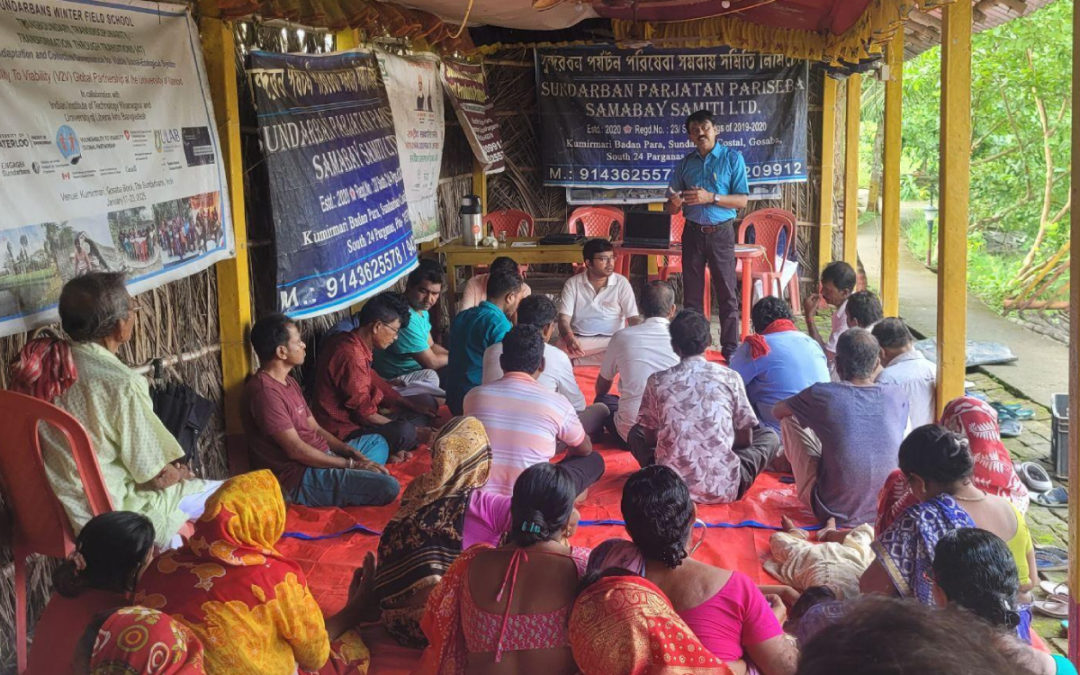
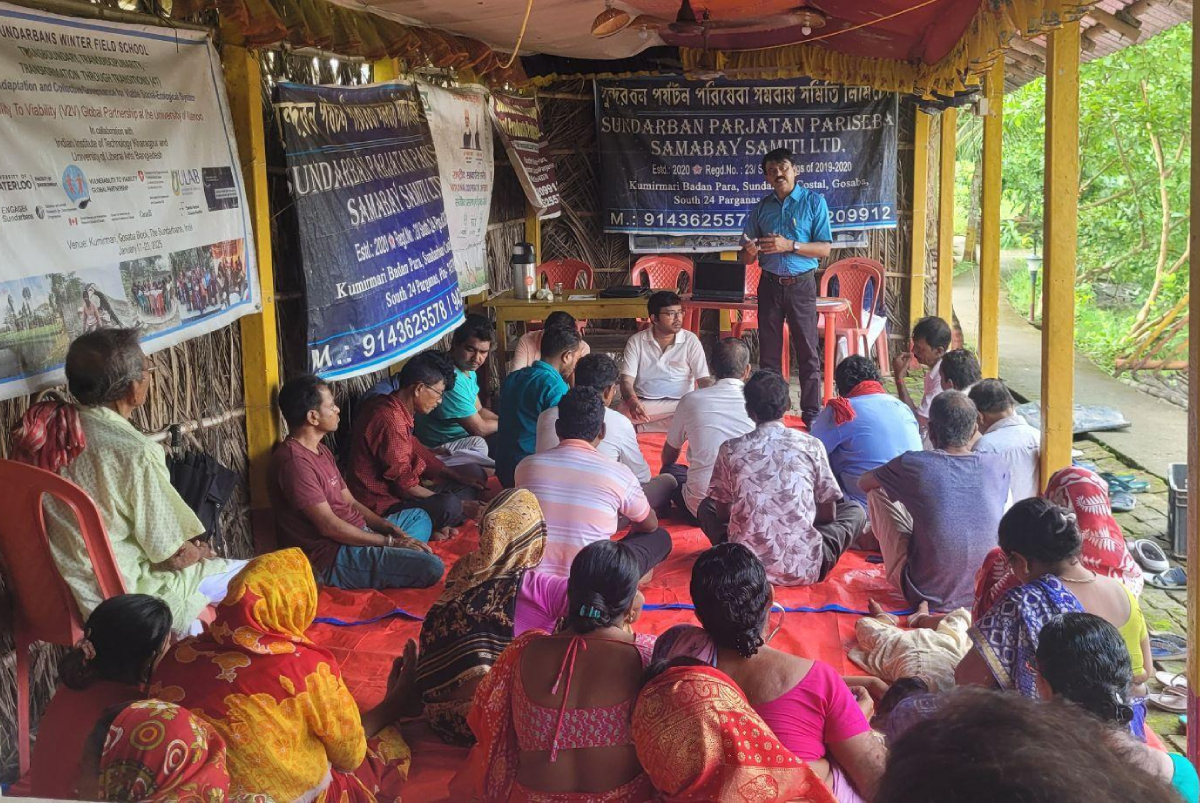
Lecture Session on vermicompost conducted by Prof. Ranjit Chatterjee. Photo: Tapas Mondal

The focus on vermicompost and trellis stems from their climate-adaptive benefits, especially in the Sundarbans, where post-cyclone saline flooding compromises agricultural land. Vermicomposting requires minimal land, can be done in household courtyards using vermi-bags or tanks, and uses household organic waste, producing harvests in 2-3 months. Trellis cultivation involves growing crops in boxes or trays filled with soil from pond beds or foundational tree soils like Banyan and Pipul, allowing cultivation without land. Professor Chatterjee emphasized that both practices enhance soil health through organic fertilization, fostering beneficial microbial activity and avoiding the degradation caused by chemical fertilizers.

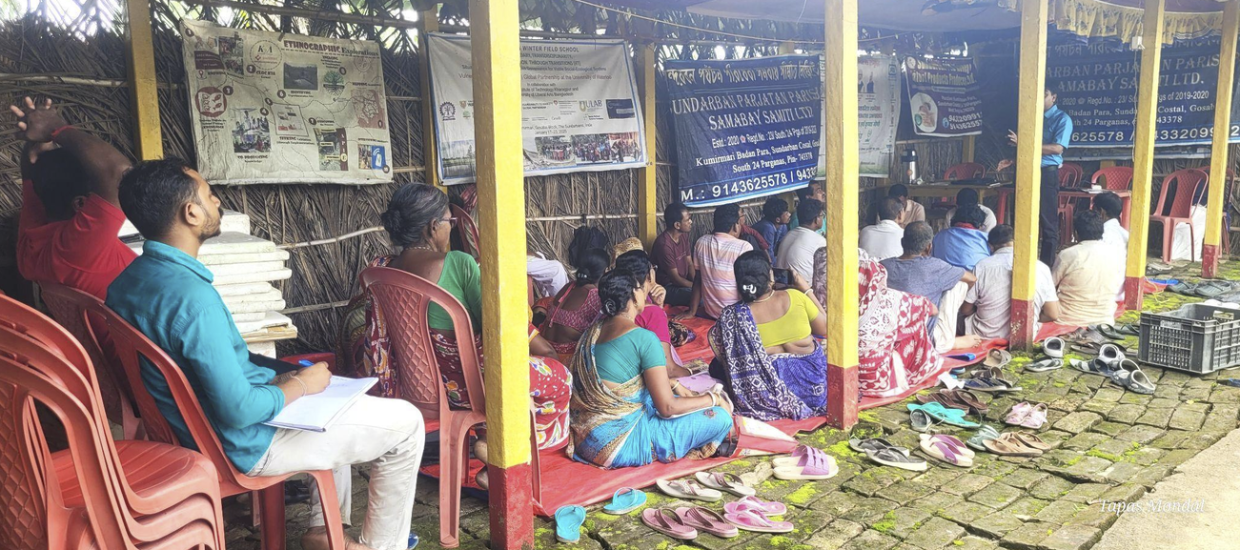
Lecture Session on trellis cultivation  conducted by Prof. Ranjit Chatterjee<br />
Photo: Tapas Mondal<br />

Lecture Session on trellis cultivation  conducted by Prof. Ranjit Chatterjee. Photo: Tapas Mondal

During the first session, participants—including SARSA members, community mobilizers, fishers, and farmers—learned about three production models: vermi-pits, vermi-tanks, and vermi-bags, tailored to different resource scenarios. The training covered the entire process, from sourcing red earthworms and preparing organic waste to managing moisture and harvesting three marketable products: worms (sold at ₹1200/kg), vermi-wash, and vermicompost. Strategies for adding value, like branded packaging and direct marketing to local government offices, were discussed to promote livelihood diversification.

The subsequent session focused on trellis cultivation—how to grow vegetables in small boxes and trays, ideal for landless or small-landholders. Since these trays do not contact soil directly, they are free from soil-borne diseases and salinity risks. Participants learned to prepare cultivation beds, select suitable crops, maintain the system, protect against pests, and access markets. Vermicompost is a key ingredient in preparing the soil within these trays, enabling the simultaneous use of both practices by utilizing one’s own compost. Harvests from trellis cultivation can recur every 2-3 months, allowing for crop rotation and income generation throughout the year. Prof. Chatterjee also explained organic pest control methods, including neem leaf water spray, mustard cake, sugar apple leaf spray, and indigenous plants like Bishkati. He stressed maximizing harvest utilization for household consumption, local sales, income, and food security.

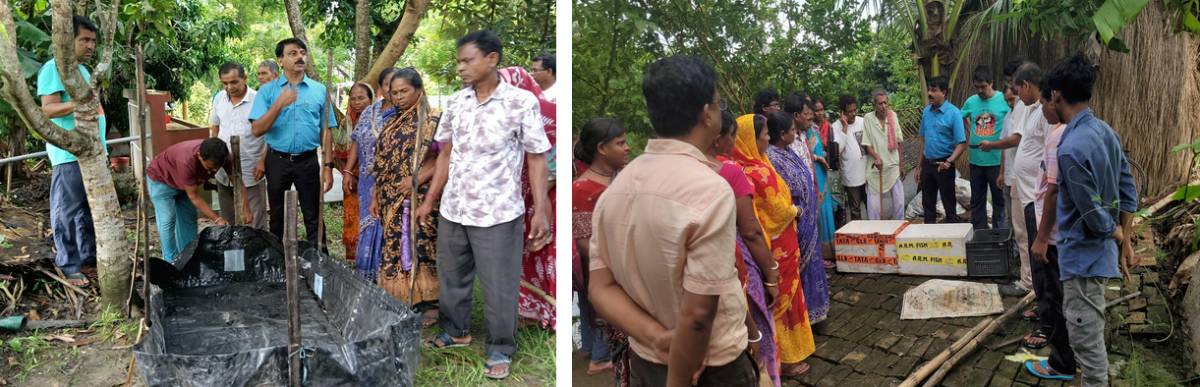
Hands-on training sessions on vermicompost and trellis cultivation by Prof. Ranjit Chatterjee

Hands-on training sessions on vermicompost and trellis cultivation by Prof. Ranjit Chatterjee
Photo: Tapas Mondal and Souradip Pathak

This intervention was co-envisioned in the ENGAGE July 2026 on-site workshop by the community collective members, agricultural scientist-expert, grassroots organization, local institution representatives, and academia, aiming to develop sustainable pathways for local resilience through scalable, equitable practices rooted in ecological realities. By empowering landless and asset-limited households, especially women, with vermicompost and trellis farming skills, the project supports a resilience strategy that recognizes localized agroecological solutions as vital responses to climate challenges in the vulnerable Indian Sundarbans.

ENGAGE4Sundarbans: In-Situ Workshop, July 2026

ENGAGE4Sundarbans: In-Situ Workshop, July 2026

Context: In this current phase of ENGAGE4Sundarbans, the prime activity is the Collective Canal Fishing Experimentation (CCFE) in Kumirmari island, assumes the vitality of local canals as a common resource, merits traditional inland fishing practices and brings together actors from diverse backgrounds for addressing local livelihood security through collective governance and ecological sustainability. Rather than treating canal fishing as an isolated economic activity, the CCFE brings together community members and external actors to explore possibilities for collective governance, sustainable resource management, and livelihood diversification. Three days in-situ workshop was conducted on 24–26 July 2026 at Sundarban Bari, Kumirmari of Gosaba block, West Bengal (India).

Aims: The workshop aimed to cultivate cross-learning within diverse knowledge systems, deepen partnerships, and identify pathways for scaling commons-based agroecological practices across the region.

Objectives: Four major objectives are -a) Strengthening the canal-fishing experimentation, b) Connecting government programmes with local initiatives, c) Enhancing more-than-fishing livelihood practices through agroecological processing and marketing and d) Advancing transformation through the scaling initiative.

Methodologies: The participatory approach adopted. The mutually designed methodologies are- i) Designing the in-situ framework, ii) Participants and rationale for participation, iii) Participatory mapping and co-learning and iv) Reflexive analysis.

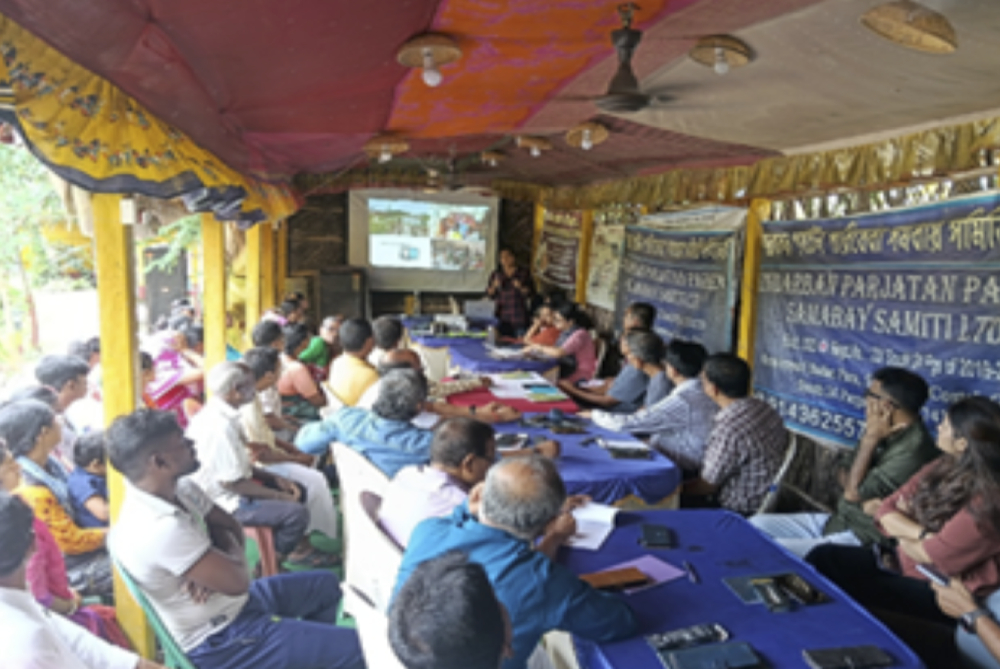
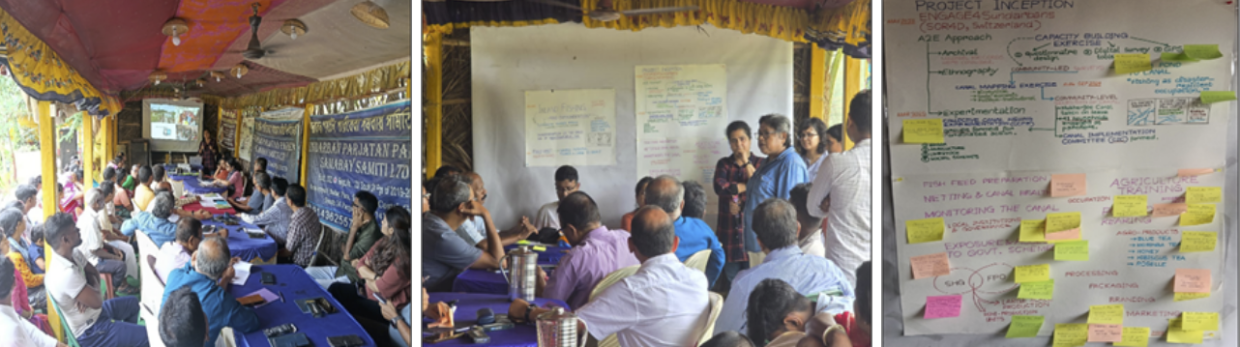
In-Situ Workshop: The July workshop is best understood not as a periodic review of the Collective Canal Fishing Experimentation (CCFE), but as a moment in which the project paused to ask what had been learned, whose knowledge had shaped the work, what remained uncertain, and what kinds of collaboration might be useful next. The workshop brought community mobilisers and households into conversation with scientists, practitioners, development actors, government officials and researchers. More importantly, it created a practical setting in which these different positions could meet around a common concern: how canal fishing and related agroecological activities might contribute to livelihood security while remaining socially and ecologically viable. The workshop also marked the beginning of a set of plans of Strengthening Water Governance (SWAG) under the Transformation Accelerating Grant (TAG) of the SOR4D programme. The broader goal of this next phase is to support the transition towards climate-resilient livelihoods by building on local governance and collective capacities, strengthening access to markets and institutional support, and exploring possibilities for wider uptake of commons-based agroecological practices. In this sense, the July 2026 workshop offered a vital space in which experimentation, reflection, collaboration, and action continue to shape one another.

Workshop outputs: The major outputs from this workshop are -a) detailed project report, b) participatory methodological output and c) an expert profiling. These deliverables will help consolidate the insights generated during the workshop and provide a structured basis for subsequent project activities. In addition, the team discussed a brief yet comprehensive immediate action plan, outlining the key follow-up activities, responsibilities, and priorities emerging from the three-day workshop.  Thus provided an important opportunity to move from discussion and reflection towards documentation, coordination, and a clear roadmap for the next phase of the project.

Way Forward / Action plans: Four major future plans emerged from this workshop – (i) Plan for operationalization: Develop a preliminary production layout in August and initiate the process of seeking necessary approvals towards setting up the mini processing unit of agro-ecological products. (ii) Knowledge brochure: Prepare a brochure on vermicomposting as one of the project’s tangible knowledge outputs and training from UBKV / North Bengal Agriculture University. (iii) Formation of a new enterprise-focused group:  In addition to the five existing canal-fishing experimentation groups, form a separate group focused on enterprise development during the scaling-out phase. (iv) Events on value chain for five agroecological products: Conduct training/workshop on the market value chains of the five agroecological products- organic honey, blue tea, hibiscus tea, lentil dumplings and vermi compost.

In-Situ Workshop, July 2026

Photos: In-situ workshop at Kumirmari, Indian Sundarbans, 24-26 July 2026

ENGAGE at POLLEN 2026

ENGAGE at POLLEN 2026

The ENGAGE4Sundarbans team convened a POLLEN 2026 panel to ask how political ecology can move beyond studying socio-ecological change to experimenting with the ways research itself can become participatory, accountable and transformative.

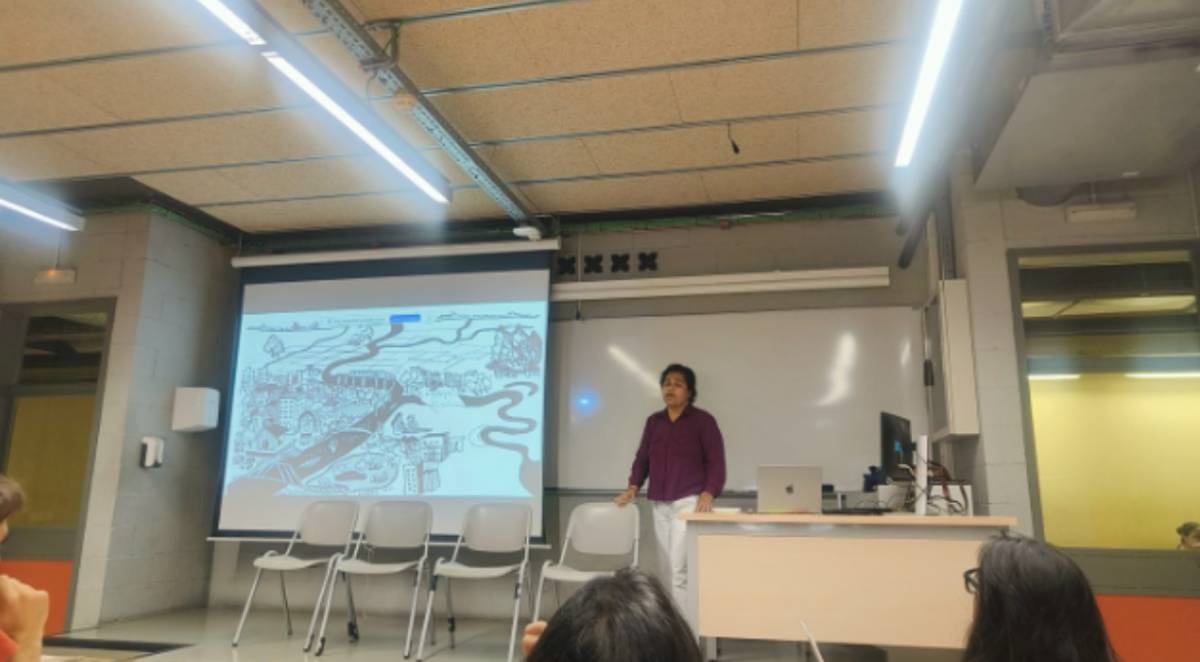
On 3 July 2026, in a classroom of the Faculty of Geography and History at the University of Barcelona, researchers from different corners of the world gathered around a question that sits at the heart of the ENGAGE project: who is transformative research for, and who gets to take part in it?

The occasion was Panel P105, ‘Transform-agencies’: A political ecology (PE) praxis through experiments in engaged ethnography, convened by ENGAGE team members from IIT Kharagpur at POLLEN 2026, the Political Ecology Network conference on “Diverse Origins, Multiple Futures”. The panel brought together researchers working across South Asia and beyond to reflect on how methodological experimentation can reshape relationships between knowledge, power and action.
About the panel

The conversation was closely connected to a central premise of ENGAGE: resilience cannot be built through solutions imposed from outside; it has to grow from situated knowledge, lived realities and sustained engagement among communities, researchers, practitioners and institutions. ENGAGE approaches the Sundarbans as a complex social-ecological system and works towards understanding its plural ‘riskscapes’ while supporting situated adaptive practices through transdisciplinary knowledge co-production. Its living-lab approach brings historical ethnographic inquiry into conversation with experimentation, allowing research to move between understanding, learning and action. It was this movement – from research about communities towards research with and alongside them – that the POLLEN panel sought to make visible. The panel’s starting point was political ecology’s longstanding concern with power, rights, justice, identity and agency, but it also asked a more reflexive question: who gets to produce knowledge, who gets to listen, and what kinds of relationships are created through the research process? The panel therefore foregrounded participatory cartography, sensory ethnography, photovoice, visual practices and transdisciplinary collaboration as more than methodological techniques. They were considered possible ways of unsettling conventional research hierarchies and opening space for different forms of participation, accountability and agency.
Layout and presentations

Presentations addressed collaborative knowledge-making and future-making; coastal dispossession and development frontiers in Bangladesh; fishworkers’ activism in West Bengal; ‘inhabitant interviewers’ and agroecological transitions in the Indian Sundarbans; human–more-than-human entanglements; comics and speculative political ecology; photographic and interdisciplinary collaborations; brackish-water governance; informal street vending; participatory and visual methods; sound art; and youth-led climate praxis. These studies suggested that transformation can emerge through seemingly modest shifts in how research is conducted—who asks the questions, whose senses and stories are taken seriously, what forms knowledge takes, and how research relationships are sustained.

The panel’s format was itself an experiment in this spirit. Rather than treating presentations as discrete pieces of knowledge, the convenors created opportunities to connect them. Participants used a shared Miro board to map recurring themes, approaches and methodological possibilities across the presentations. The second session culminated in a roundtable organised around four questions: which concepts need rethinking; which methods deserve further experimentation; where opportunities for transformative research might lie; and what collaborations could emerge from the conversation. The intention was not to arrive at a single definition of transformative research, but to create a space where its possibilities could be collectively explored. Sessions were designed as conversation rather than a procession of talks. Short pauses invited reflection on what kind of praxis each study practised. The day closed with a roundtable on concepts needing rethinking, methods deserving experimentation, opportunities for transformative research, and collaborations taking shape.

POLLEN 2026

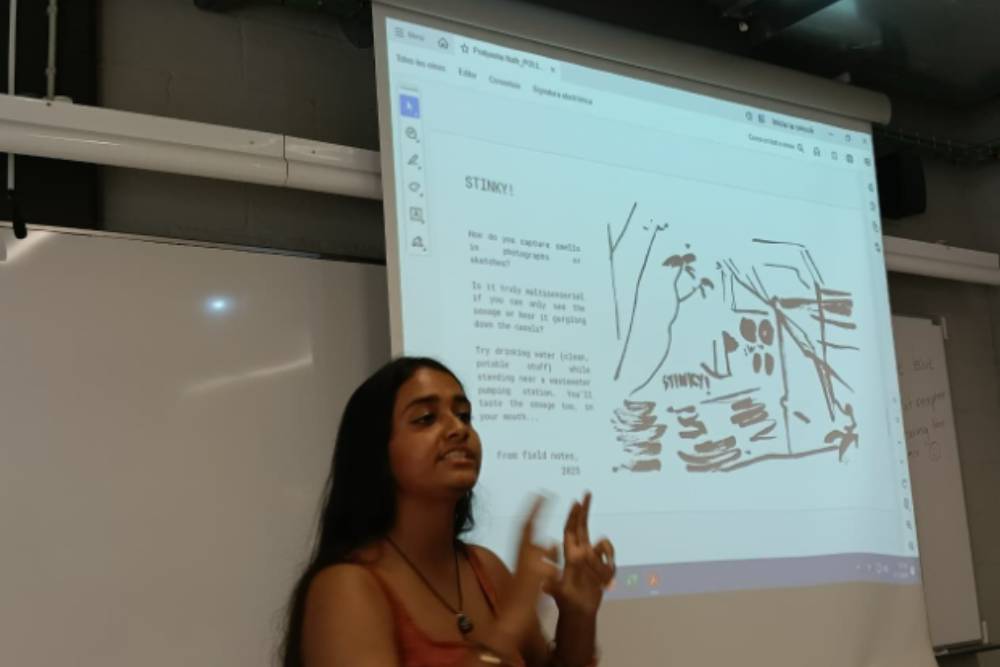
“Stinky!”: a page from field notes asks how smell can be captured in images

POLLEN 2026

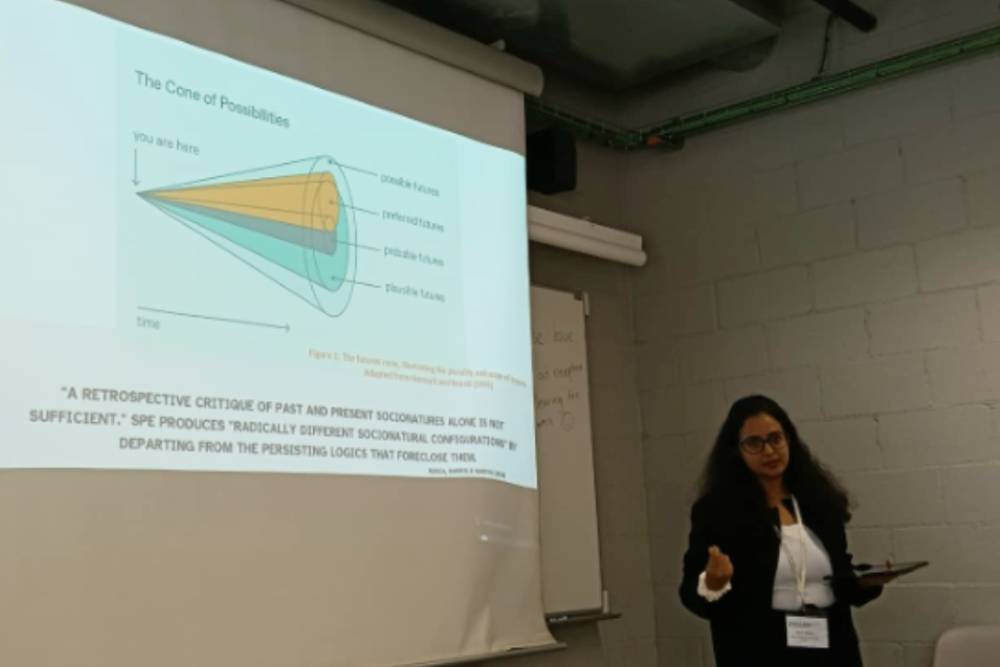
The “cone of possibilities” framed a discussion of speculative political ecology

Carrying forward

The exchange in Barcelona also reinforced an important aspect of ENGAGE’s work: transformation is not necessarily synonymous with scale, novelty or a ready-made solution. It can begin with recognition—with taking local knowledge seriously, making visible practices that are often overlooked, and creating relationships through which different actors can learn from one another. It can also involve uncertainty, negotiation and reflexivity: recognising that transdisciplinary work brings institutional barriers, epistemic differences and ethical questions alongside its possibilities. For ENGAGE, then, the panel was more than an opportunity to present project experiences to an international political-ecology audience. It was a way of carrying the project’s questions outward and bringing new questions back. By placing the everyday practices of knowledge co-production, experimentation and engagement in dialogue with diverse political-ecology experiences, the panel opened a wider conversation about what research can do. At its heart was a simple but demanding proposition: if the socio-ecological futures we seek are more just and resilient, perhaps the processes through which we produce knowledge about them must also become more collaborative, reflexive and transformative.

POLLEN 2026

A hand-drawn riverine landscape on screen

The researchers left Barcelona with new questions, new collaborators and a shared sense that praxis begins with listening. These conversations will keep shaping how ENGAGE works with communities across the Sundarbans.

Inauguration of Crop-processing Facility

Inauguration of Crop-processing Facility

ENGAGE event report (1)

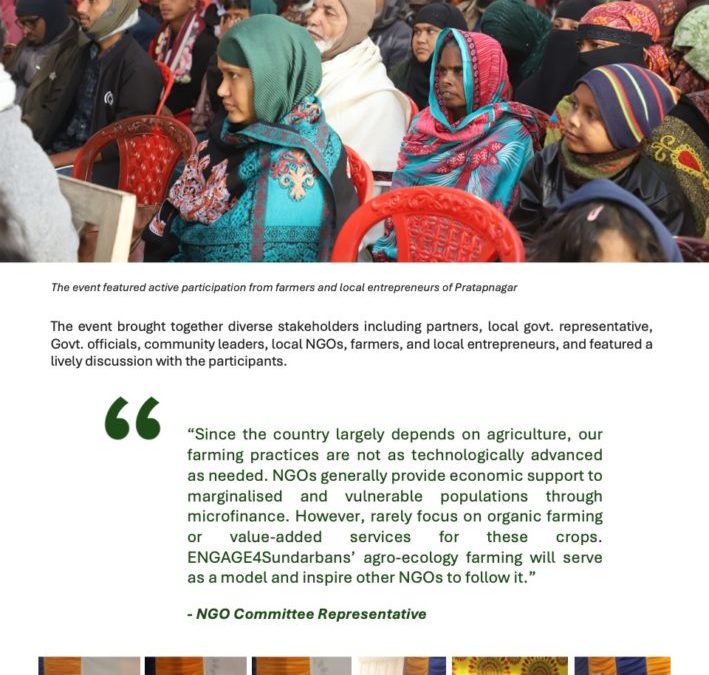
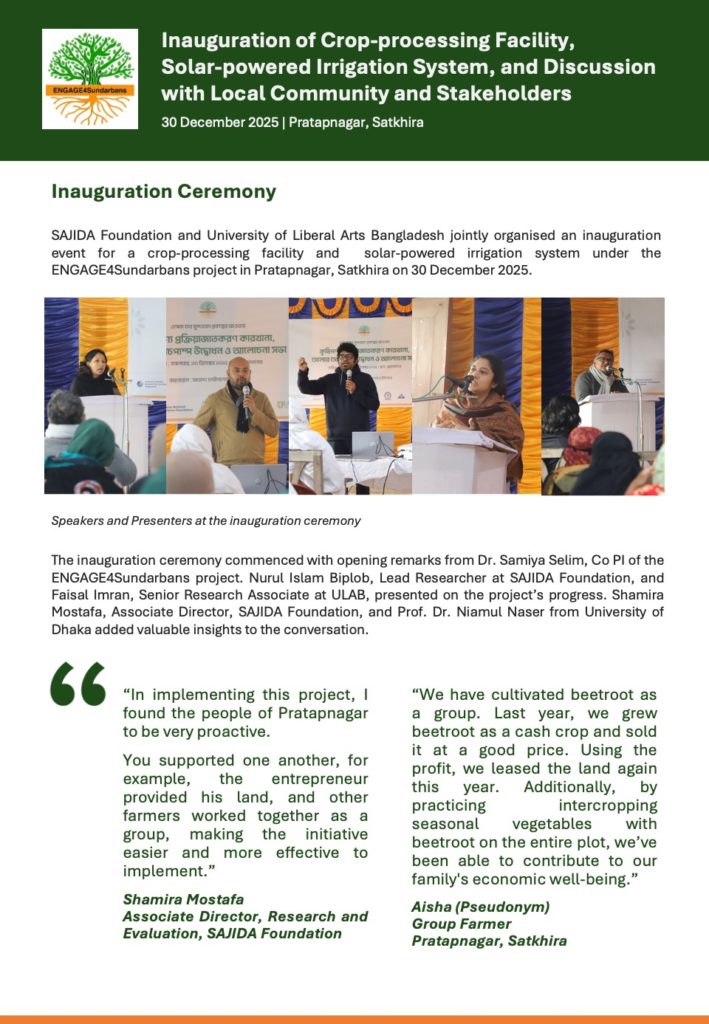
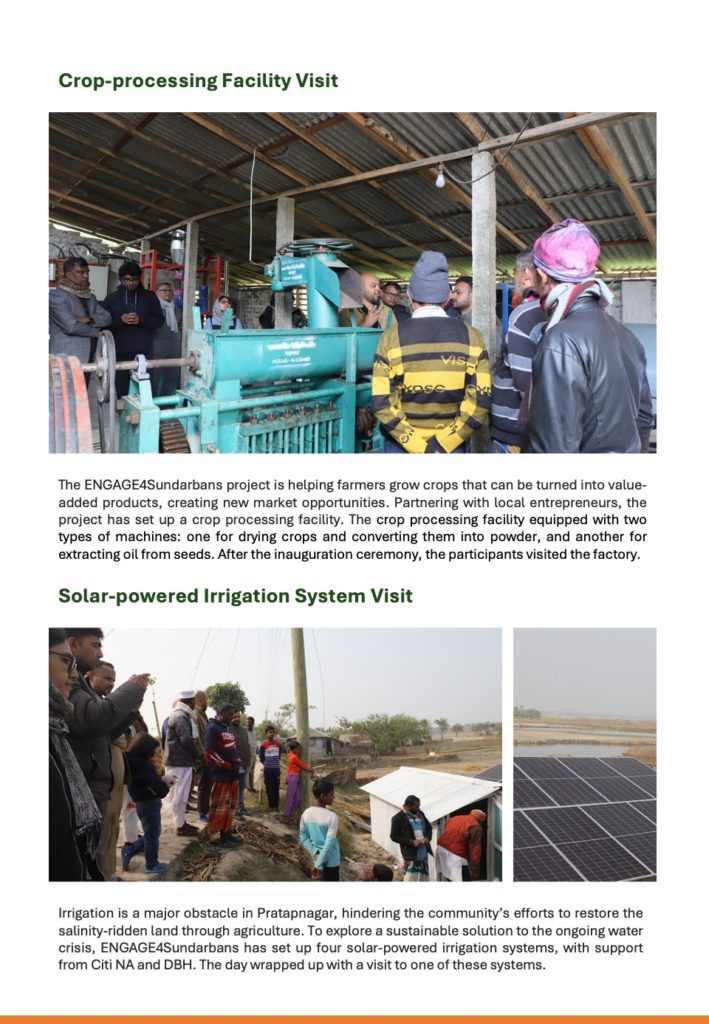
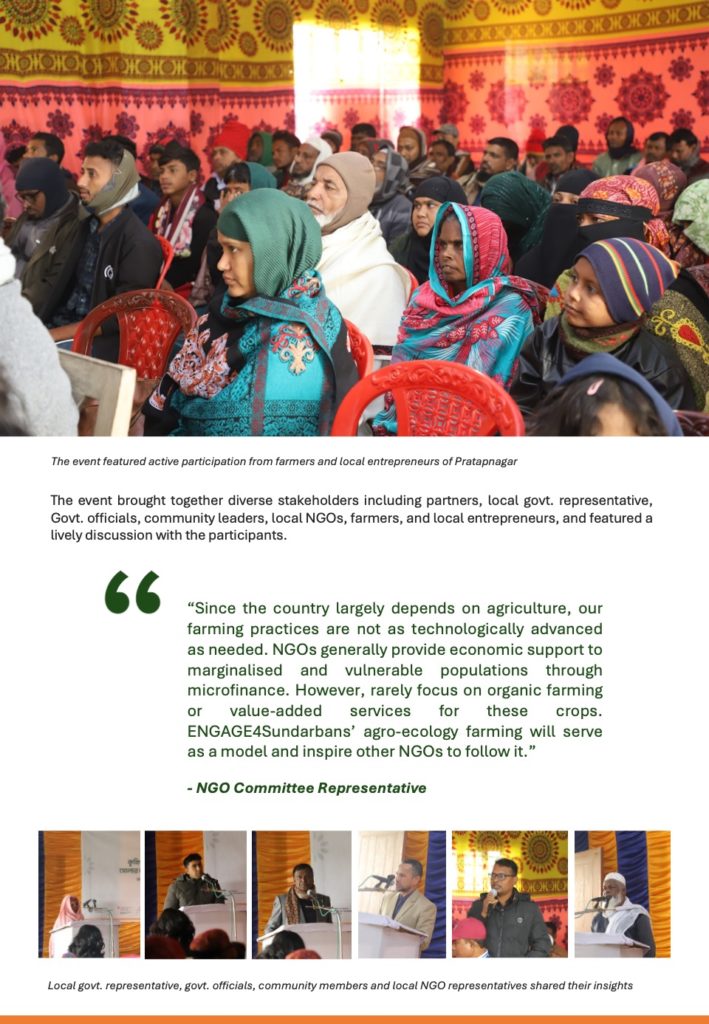
SAJIDA Foundation and the University of Liberal Arts Bangladesh jointly organised an inauguration event for a crop-processing facility and a solar-powered irrigation system under the ENGAGE4Sundarbans project in Pratapnagar, Satkhira, on 30 December 2025, attended by the local community, government officials, NGO representatives, and other stakeholders.


Of Fish and Futures: A Grand Beginning through Re/lease

Of Fish and Futures: A Grand Beginning through Re/lease

Of Fish and Futures: A Grand Beginning through Re/lease

Blog by Spriha Roy, IIT Kharagpur. Spriha.roy24@gmail.com

On the 31st of August and the 5th of September 2025, the Mukherjee Canal in Kumirmari, an island situated in Gosaba block of the Indian Sundarbans, came alive with a vibrant community activity that focussed on ecological renewal. Spearheaded by the Sarsa Group—a collective comprising 41 households residing along the canal, the activity signified a milestone in the ongoing Collectivised Canal Fishing Experimentation (CCFE) initiative under the ENGAGE4Sundarbans project.

This two-phase release of fish fingerlings, conducted under the guidance of a transdisciplinary Indian team comprising academic researchers, local field implementation partners, advisory committee members, and technical experts from the Central Inland Fisheries Research Institute (CIFRI), brought together diverse forms of knowledge—scientific, traditional, and shared. As the fingerlings were gently introduced into the canal, the act of re/leasing became both a material and a symbolic gesture: of reinhabiting ecologies, of reimagining collective futures, and of reaffirming community-led management over shared aquatic commons.

This photo essay attempts to document not only the technical interventions in collectivised inland fishing, but also tries to highlight the deeply embodied place-based nuances of inter-generational knowledge systems, sustainable practices and hope. The images capture the multi-sensory textures of the occasion: the muddy feet and monsoon skies, the choreography of coordinated human chain carrying the boxes to the rhythms of dhak and conch shells, and systematically releasing the fingerlings to the canal.

Behind the Scenes of Planning and Logistics

The fingerling release was preceded by intensive planning involving the project team, local community members, and technical experts. Multiple consultations were held to determine ecologically appropriate methods for releasing during both phases of the activity. Fingerlings were procured from a certified vendor in Naihati, North 24 Parganas, West Bengal, and was transported in oxygenated plastic bags. The consignment included approximately 285,500 fingerlings distributed across seven species:
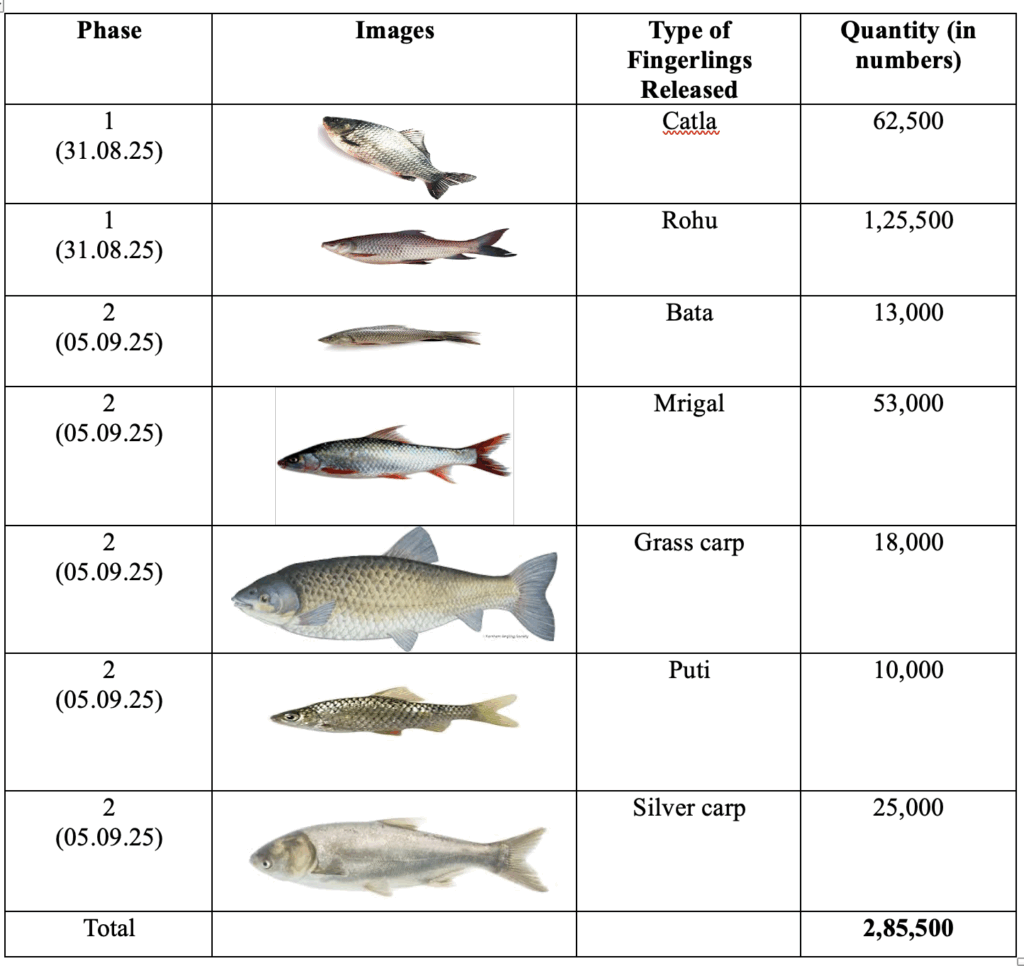
Each fingerling measured between 0.75-0.90 inches and weighed about 0.3 grams. The operation was coordinated under the supervision of a CIFRI principal scientist, in collaboration with the IIT Kharagpur team. After reaching Dhamakhali, the consignment was transferred to a boat and transported to Sucharita Sangha Ghat (Bonbibi Tala) in Kumirmari, the nearest access point to the Mukherjee Canal.
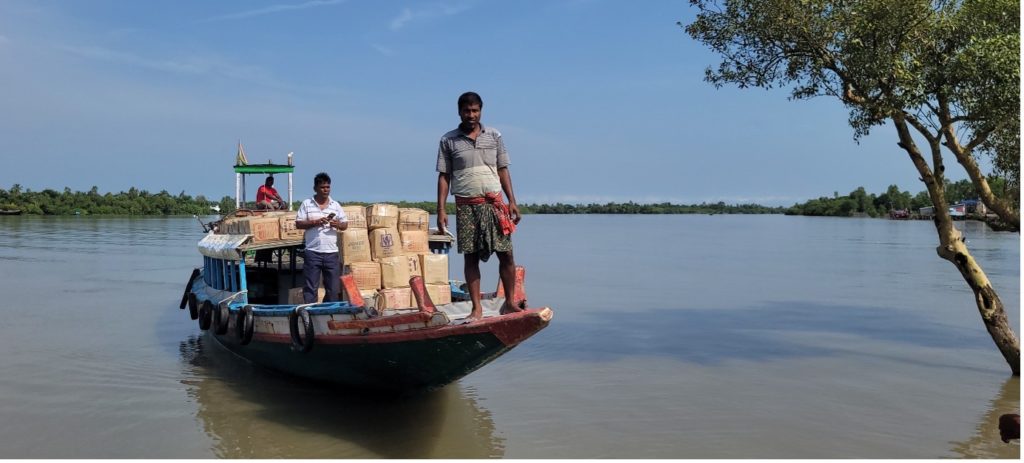
Image 1. Boat loaded with boxes of fingerlings brought to Sucharita Sangha Ghat in Kumirmari.
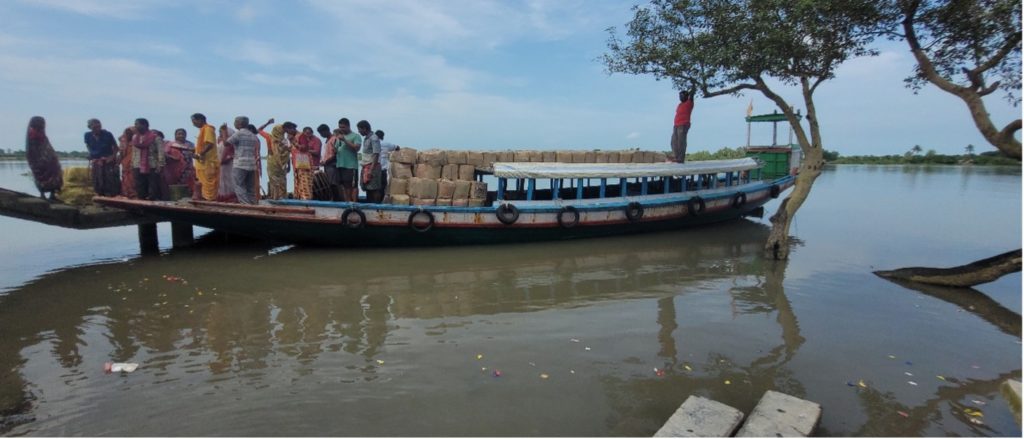

Image 2. Sarsa members welcoming the boat with great enthusiasm!

Rituals of Invocation

As the consignment of fingerlings reached Sucharita Sangha Ghat, the community gathered to celebrate this moment with traditional ritual of Makal and Ganga puja. Accompanied by the rhythmic beat of dhaks (traditional drums) and echoing vibrations of ullu and conch shells, members of the Sarsa Group offered prayers to invoke the blessings of the river. This act of reverence emphasises the culturally embedded symbolism of water in the community—as both a life-sustaining presence and a sacred force. Such traditional interventions serve as a medium between the perceived scientific practice and the unseen beliefs.
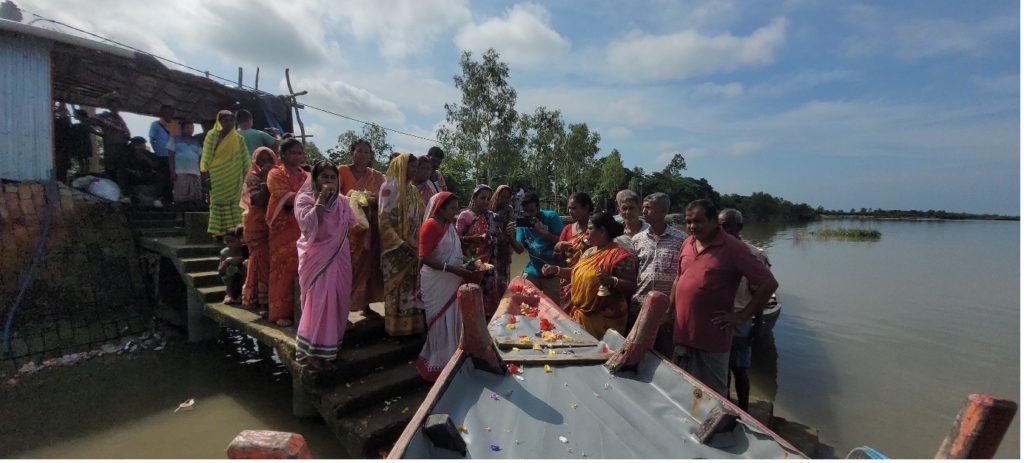
Image 3. Community members performing traditional rituals before the fish release.
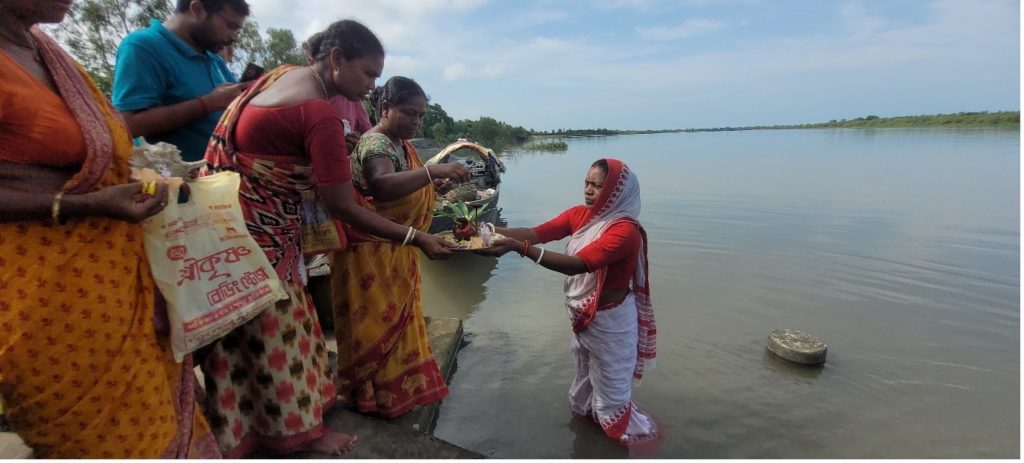

Image 4. A member of the Sarsa group performing Ganga Puja.
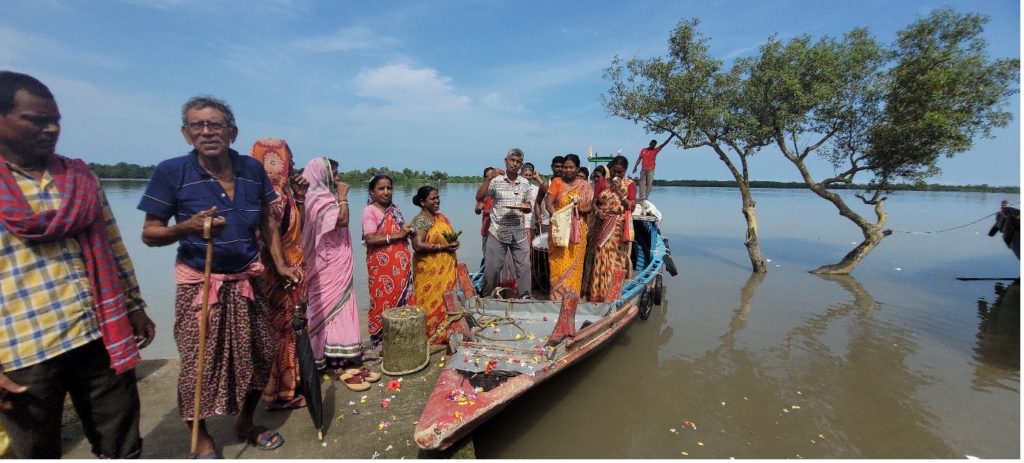

Image 5. A collective comprising intergenerational participation and a commitment to sustaining the canal as a community-managed resource.

Collective Mobilisation through Human Chain

Following the offering rituals, community members formed a human chain to transport oxygenated boxes of fingerlings from the ghat to the canal’s edge. Navigating muddy terrain and narrow paths, this coordinated effort reflected both logistical precision and a shared sense of responsibility. The act of carrying became more than a practical task as it reflected collective effort in sustaining their canal ecosystem.
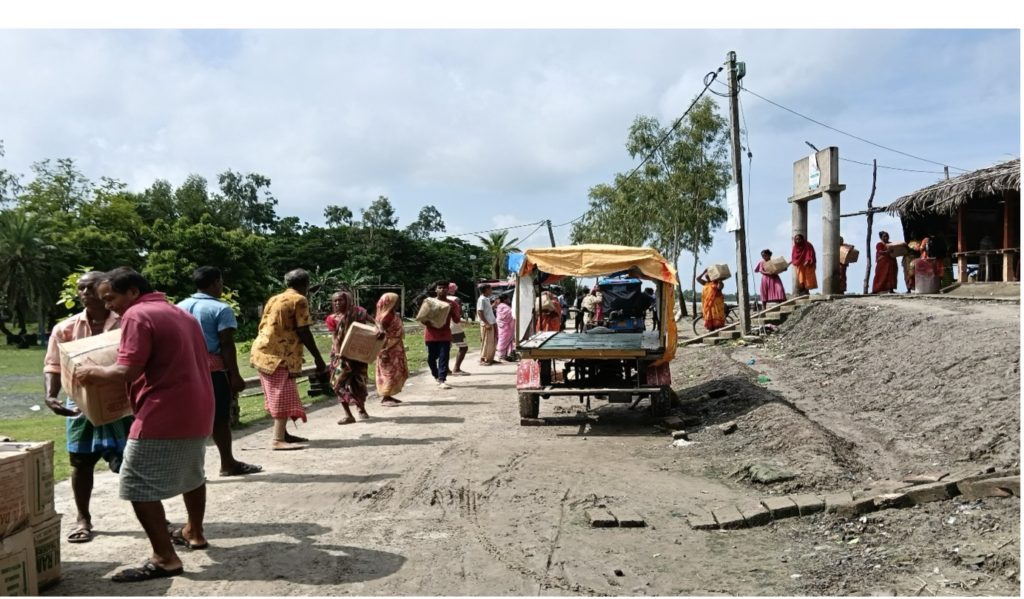

Image 6. Members of the Sarsa group carrying fingerling boxes from the ghat to the canal through a coordinated human chain.
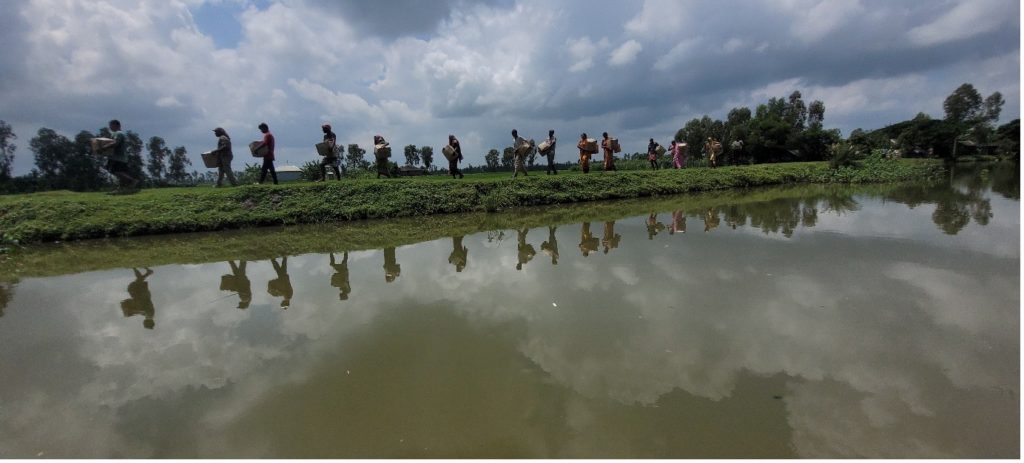
Image 7. The members are walking across the Mukherjee canal with the boxes.
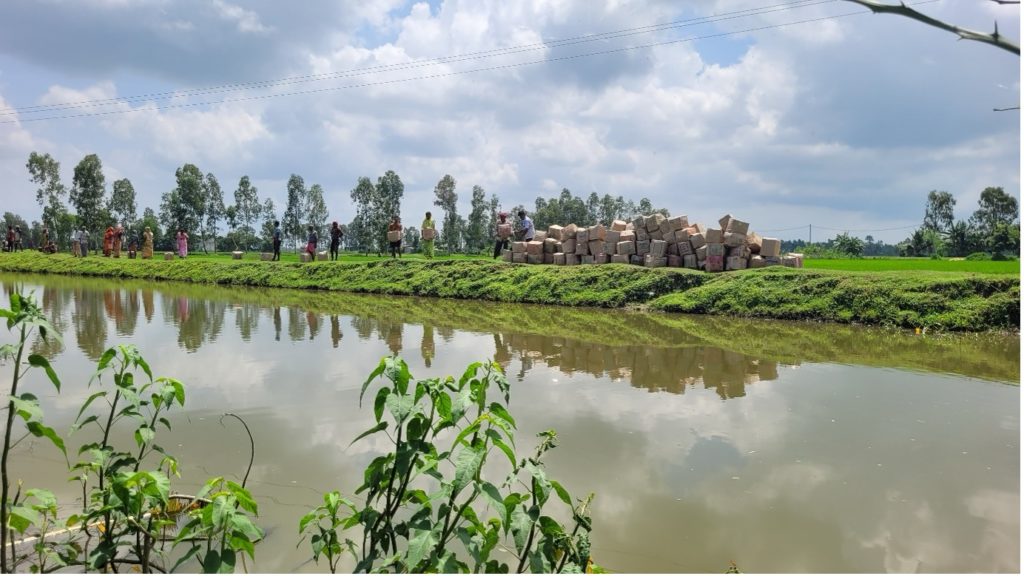

Image 8. Stacking the boxes at the end of the canal before the release.

Fingerlings Releasing Protocol

The release process followed standardised acclimatisation protocols to minimise stress and improve post-release survival. As per guidance from Dr. Archan Kumar Das, Principal Scientist at CIFRI, the oxygenated plastic bags, also referred to as fingerling balloons—were placed on the surface of the canal water, allowing them to float for approximately 15 minutes to achieve thermal equilibrium.

To further reduce stress on the sensitive fingerlings, about 100 ml of canal water (roughly one mug) was carefully added to each bag to initiate gradual acclimatisation. Once the fingerlings exhibited active movement, they were gently released at the canal’s edge, minimising shock and dispersal stress. This carefully managed process reflects a synthesis of technical precision and ecological care, integral to the broader aims of the Collectivised Canal Fishing Experimentation (CCFE).
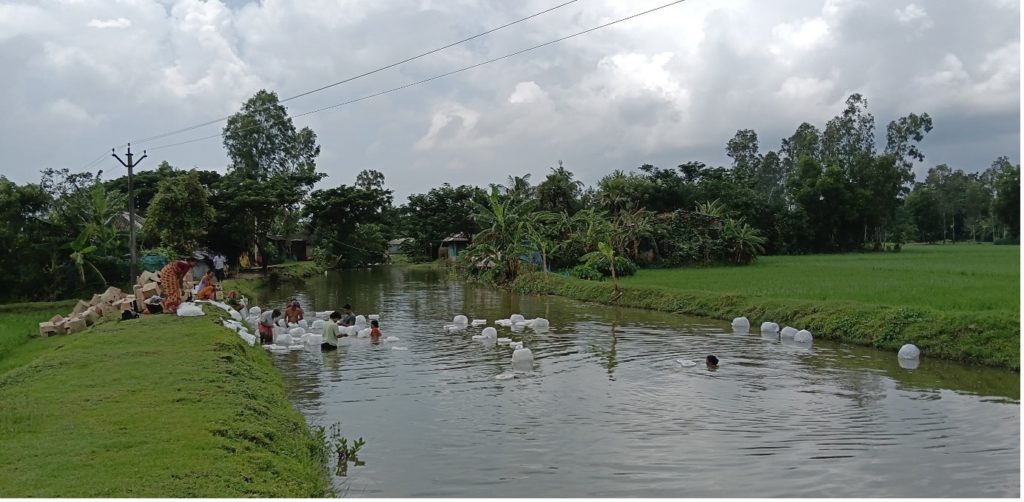

Image 9. Floating fingerling balloons.
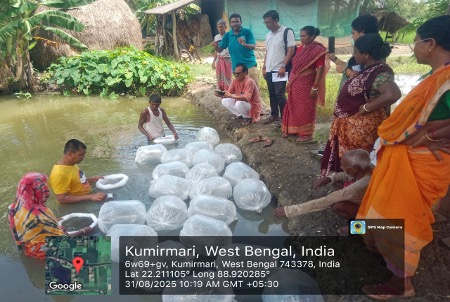


Image 10. Gradually adding 100ml canal water to each of the fingerling balloon.
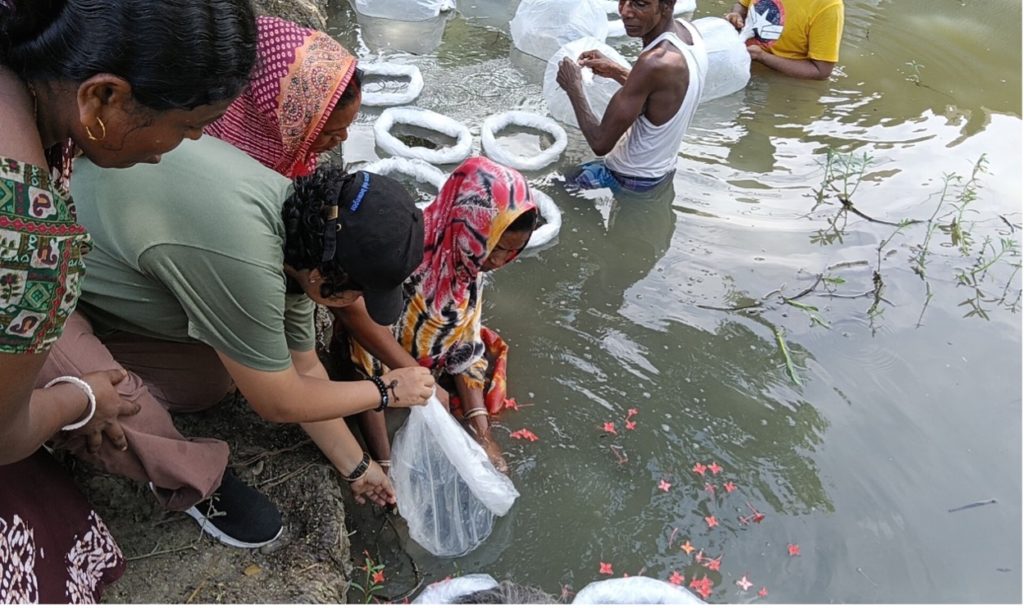

Image 11. Releasing fish fingerlings in the canal.

More than the Re/lease: Reflections on Practice, People and Place

While the activity unfolded and began to gather momentum, an elderly man stood at a distance, observing the process attentively. When approached, he shared, “Though I am not a member of this collective, I am aware of the community initiative taking place, and I feel happy for my neighbours. My son works as a migrant labourer, and I run a small shop near the ghat. My earnings are sufficient, and I am able to manage. But this activity will help others to find ways for living.” His words mirrored not only a sense of solidarity, but also an acute awareness of the broader socio-economic impact this experiment promises to offer.

Among the Sarsa team members, one elderly participant stood out for his remarkable energy and commitment. Despite his age, he actively assisted in unwrapping the boxes with a level of stamina comparable to that of younger volunteers. When asked about his age, he responded, “I am 70 years old, and the first house in this lane belongs to me. Since my son is currently away for work, I am here to take his place. I may not be equipped to carry out the more complex procedures, but I can certainly help with unboxing the cardboard packages.” Such reflections are deeply meaningful in understanding the fundamental idea that no contribution is insignificant. His involvement, though modest in scope, played a vital role in supporting the overall coordination and success of fingerlings release event, highlighting the importance of inclusive community participation across generations.


Rahima’s Commitment to Crop Diversity

Rahima’s Commitment to Crop Diversity

Rahima Khatun’s life has been shaped by challenges. She lives with her husband, one of her sons, his wife, and their child. Her two other sons have married and moved out. Her husband, now elderly, is unable to work much, and the son who lives with them is only able to earn seasonally. Together, their incomes are not enough to support the family of five. 

With no land in their name, they faced not just financial uncertainty but also a lack of food security. 

But Rahima is not one to be intimidated by obstacles. Through sheer determination and persistence, she turned her hardship into an opportunity. 
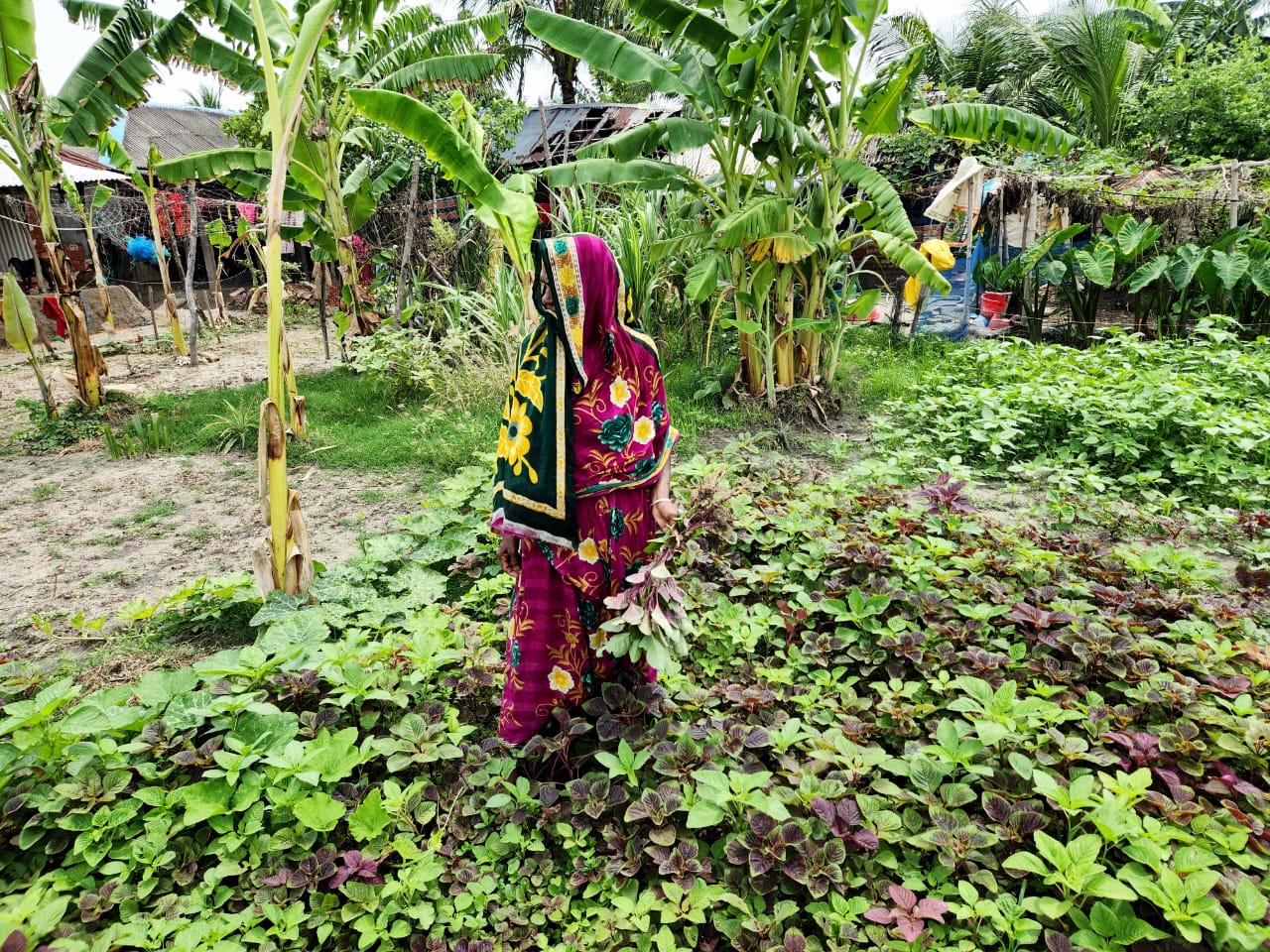
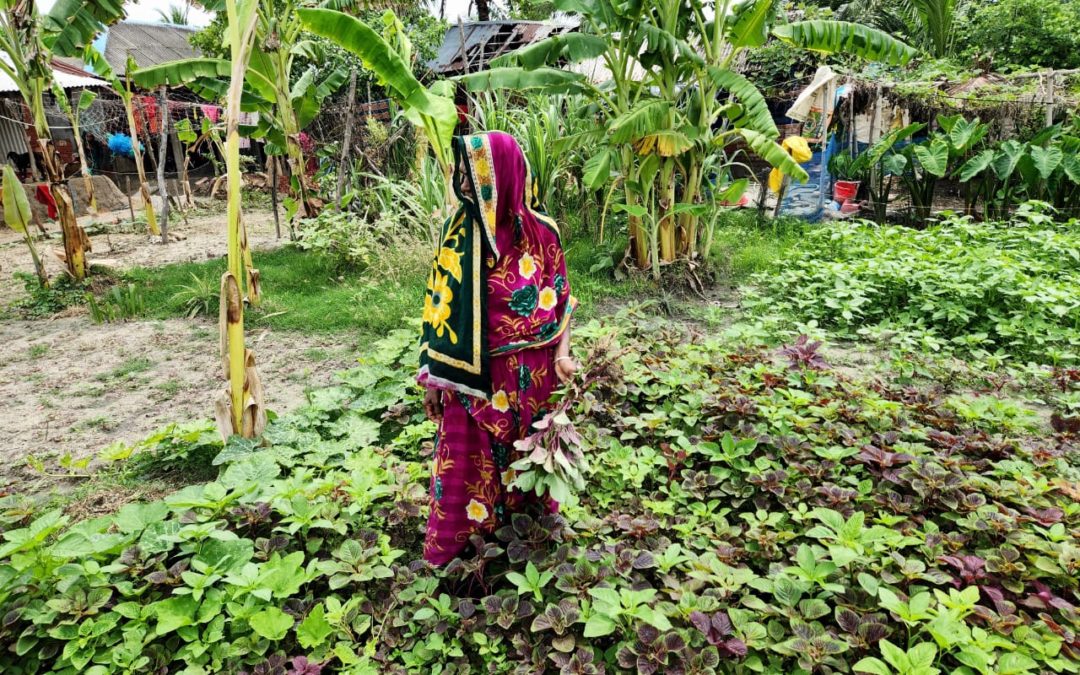
Rahima Khatun grows a multitude of vegetables on her yard.

A Natural Leader in the Field

When SAJIDA Foundation’s ENGAGE4Sundarbans project started its ethnographic research, Rahima was selected as research participant due to her involvement with agriculture. She spoke candidly during interviews, sharing her farming knowledge and the struggles that came with having limited land and financial resources.  

From the beginning, Rahima was determined to carve out a space for herself in her family and community. She was surprised and encouraged when she learned she had been selected to join one of ENGAGE4Sundarbans’s intervention groups testing crops with high value addition potential. She was placed in the group assigned to grow fennel along with two other female farmers. 

Before long, Rahima became much more than just a participant. She took the lead in group planning, organised meetings, and became an active figure in project activities. Even her husband began to support her involvement, gradually letting go of his initial doubts. 

As part of ENGAGE4Sundarban project’s group farming initiative, she now cultivates rice, grains, and vegetables on the land next to her home. In another small plot of just two decimals, she farms freshwater fish for her family’s consumption. Her yard, too, has a multitude of vegetables growing. Years ago, her elder son started building a roofed house, but financial constraints postponed the construction. Rahima, ever resourceful, transformed the unfinished structure into yet another thriving vegetable garden. 
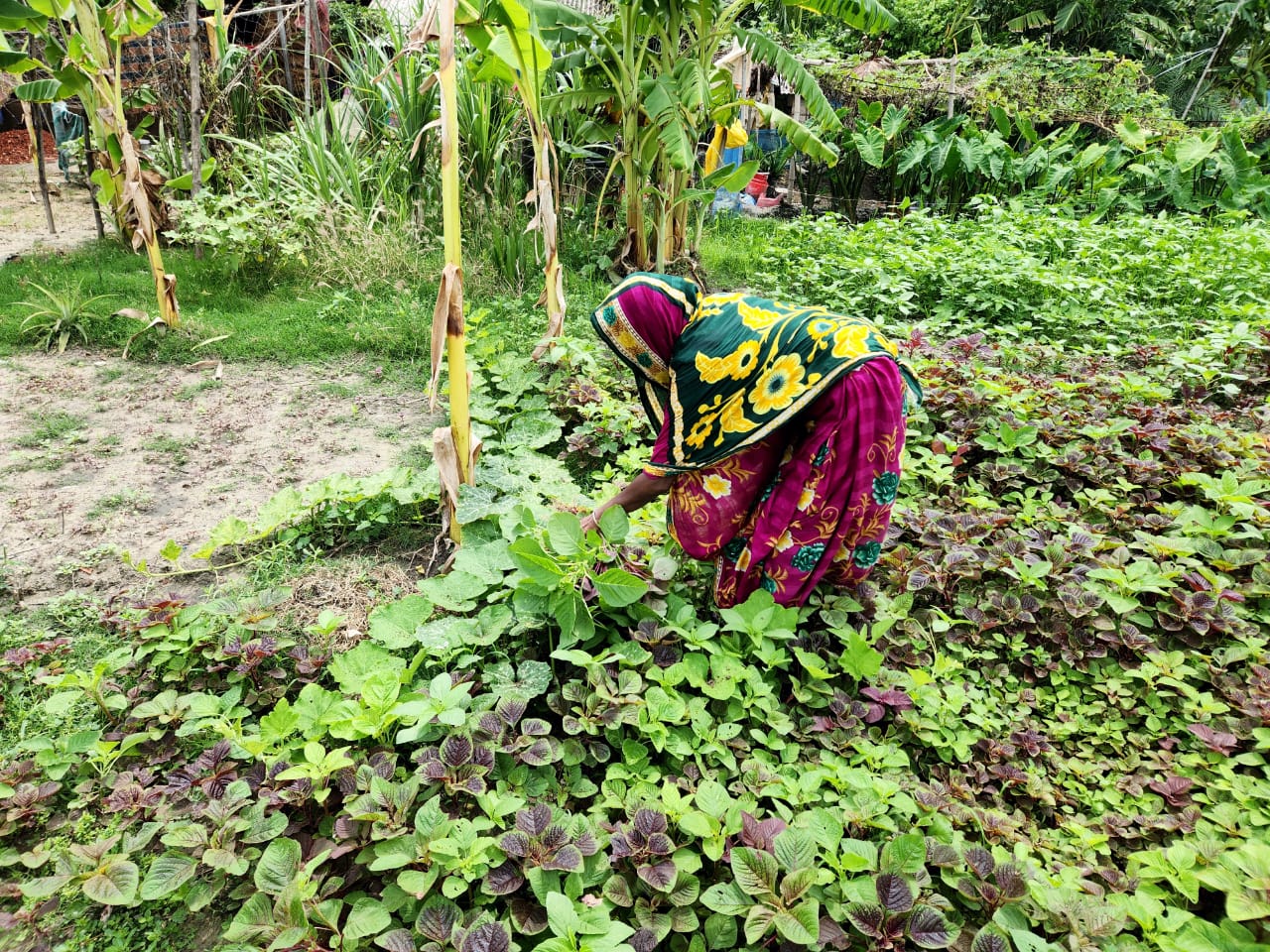
Through determination and persistence, Rahima has turned her hardship into an opportunity.

A Home Garden to Ensure Food Security 

What truly sets Rahima’s farming apart is her commitment to diversity. During the monsoon, she grows Aman paddy. Once harvested, she uses the same land to plant potatoes, sunflowers, fennel, sesame, and melon during the Rabi season from Mid-November to Mid-March. In other plots, she cultivates mustard alongside red cabbage, spinach, radish, and coriander, aubergine, onions, beans, beetroot, gourd, and winter crops like spring onions, garlic, and chillies also find space in her garden. Her motivation is both practical and personal. She refuses to buy oil or vegetables from the market.

“Why spend money [on oil or vegetables] when I can grow them myself?” Rahima, a traditional farmer and participant of ENGAGE4Sundarbans project, says.

One of Rahima’s long-held dreams was to lease land in her own name, so she could grow rice without depending on others. Her wish came true when ENGAGE4Sundarbans leased land under the names of Rahima and her group members. 

Looking ahead, Rahima hopes that by selling fennel in the Rabi season and vegetables during Kharif (Mid-March to Mid-November), she can earn enough to lease more land and commercially scale up her farming.