
Prof. Ranjit Chatterjee from Uttar Banga Krishi Viswavidyalaya led the sessions, combining theory with practical demonstrations. Hosted at Sundarban Bari community space by Sundarban Jana Sramajibi Manch (SJSM), with support from IIT Kharagpur and development practitioner from the Centre for Development of Human Initiatives (CDHI), Jalpaiguri, the training reflects an action research approach.
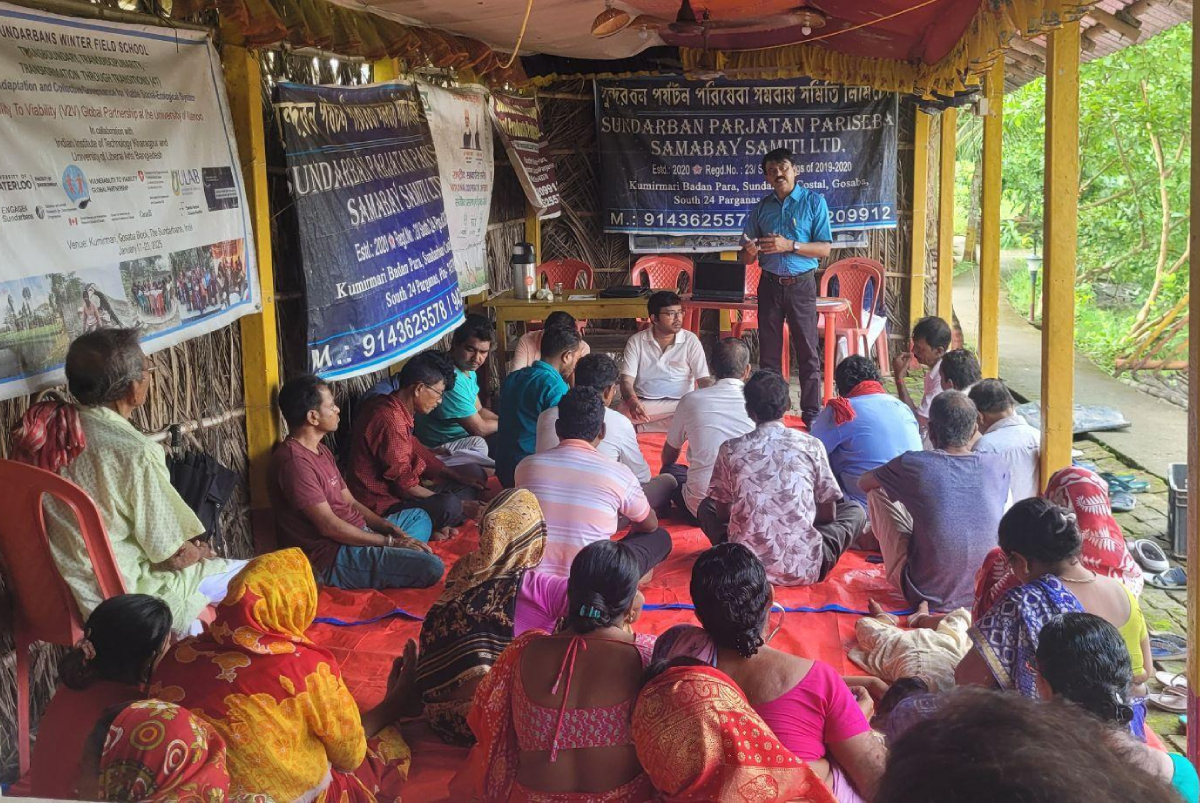
Lecture Session on vermicompost conducted by Prof. Ranjit Chatterjee. Photo: Tapas Mondal
The focus on vermicompost and trellis stems from their climate-adaptive benefits, especially in the Sundarbans, where post-cyclone saline flooding compromises agricultural land. Vermicomposting requires minimal land, can be done in household courtyards using vermi-bags or tanks, and uses household organic waste, producing harvests in 2-3 months. Trellis cultivation involves growing crops in boxes or trays filled with soil from pond beds or foundational tree soils like Banyan and Pipul, allowing cultivation without land. Professor Chatterjee emphasized that both practices enhance soil health through organic fertilization, fostering beneficial microbial activity and avoiding the degradation caused by chemical fertilizers.
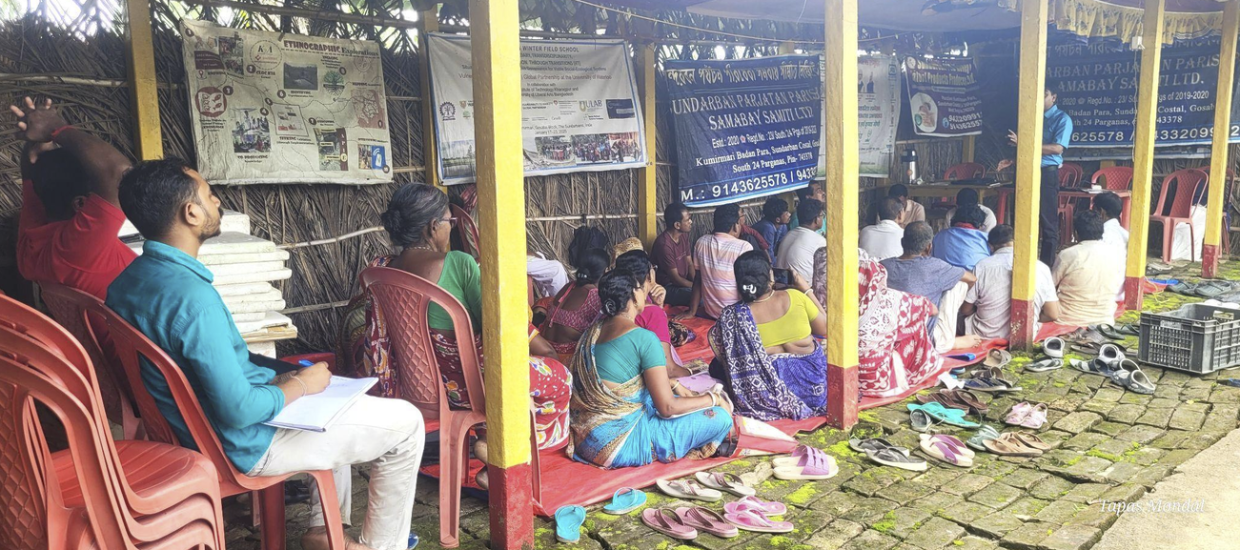
Lecture Session on trellis cultivation conducted by Prof. Ranjit Chatterjee. Photo: Tapas Mondal
During the first session, participants—including SARSA members, community mobilizers, fishers, and farmers—learned about three production models: vermi-pits, vermi-tanks, and vermi-bags, tailored to different resource scenarios. The training covered the entire process, from sourcing red earthworms and preparing organic waste to managing moisture and harvesting three marketable products: worms (sold at ₹1200/kg), vermi-wash, and vermicompost. Strategies for adding value, like branded packaging and direct marketing to local government offices, were discussed to promote livelihood diversification.
The subsequent session focused on trellis cultivation—how to grow vegetables in small boxes and trays, ideal for landless or small-landholders. Since these trays do not contact soil directly, they are free from soil-borne diseases and salinity risks. Participants learned to prepare cultivation beds, select suitable crops, maintain the system, protect against pests, and access markets. Vermicompost is a key ingredient in preparing the soil within these trays, enabling the simultaneous use of both practices by utilizing one’s own compost. Harvests from trellis cultivation can recur every 2-3 months, allowing for crop rotation and income generation throughout the year. Prof. Chatterjee also explained organic pest control methods, including neem leaf water spray, mustard cake, sugar apple leaf spray, and indigenous plants like Bishkati. He stressed maximizing harvest utilization for household consumption, local sales, income, and food security.
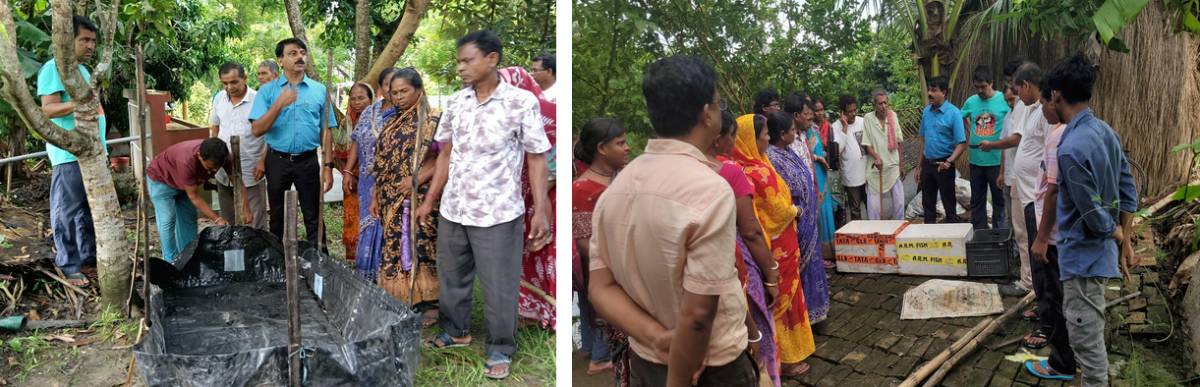
Hands-on training sessions on vermicompost and trellis cultivation by Prof. Ranjit Chatterjee
Photo: Tapas Mondal and Souradip Pathak
This intervention was co-envisioned in the ENGAGE July 2026 on-site workshop by the community collective members, agricultural scientist-expert, grassroots organization, local institution representatives, and academia, aiming to develop sustainable pathways for local resilience through scalable, equitable practices rooted in ecological realities. By empowering landless and asset-limited households, especially women, with vermicompost and trellis farming skills, the project supports a resilience strategy that recognizes localized agroecological solutions as vital responses to climate challenges in the vulnerable Indian Sundarbans.