“Invisibility and Recognition of Women’s Agricultural Work in the Bengal Delta: Between Empowerment and Constraint”
Paper presented at the ISWA conference in Bern : https://iswa2026.symposium.inrae.fr/ International Symposium on Work in Agriculture – ISWA in collaboration with Fachausschuss für Arbeitswissenschaften im Landbau and HAFL Cecchini Institute “Addressing current and future challenges of work in agriculture: research, policy and practice” 7-10 July 2026
Emilie CREMIN1, Jinat HOSSAIN2
1 Université de Lausanne, Switzerland;emilie.cremin@gmail.com,
2 Université of Bern, Switzerland; jinat.hossain@geo.uzh.ch
Women’s labour is central to agricultural production in the Bengal delta (India and Bangladesh), yet it remains persistently undervalued, informalised, and rendered invisible within agrarian economies and policy frameworks. This paper examines the specific challenges faced by women engaged in agricultural work in deltaic environments marked by hydromorphological instability, agrarian transitions, and socio-ecological change. Drawing on qualitative fieldwork conducted in the Bengal delta, it analyses how women’s contributions— ranging from farming and aquaculture to resource management and care work—are obscured by gendered divisions of labour, land tenure regimes, and development narratives that privilege male farmers and market-oriented production.
Beyond documenting invisibility, the paper critically engages with processes of (re)recognition promoted through development interventions, state policies, and NGO programmes aimed at empowering women and making their work visible. While recognition can open access to resources, rights, and political voice, it also generates new forms of regulation, surveillance, and normative expectations that may reinforce gendered responsibilities and intensify women’s workloads. The paper highlights this ambivalence, showing how visibility can simultaneously enable recognition and impose new constraints within increasingly technocratic, project-driven governance frameworks.
By situating women’s agricultural labour within the socio-ecological dynamics of the Bengal delta, the paper contributes to feminist political ecology by questioning the assumption that visibility is inherently emancipatory. It argues for a more nuanced understanding of recognition that accounts for power relations, environmental uncertainty, and women’s own strategies of negotiation, partial visibility, and resistance in deltaic agrarian systems.
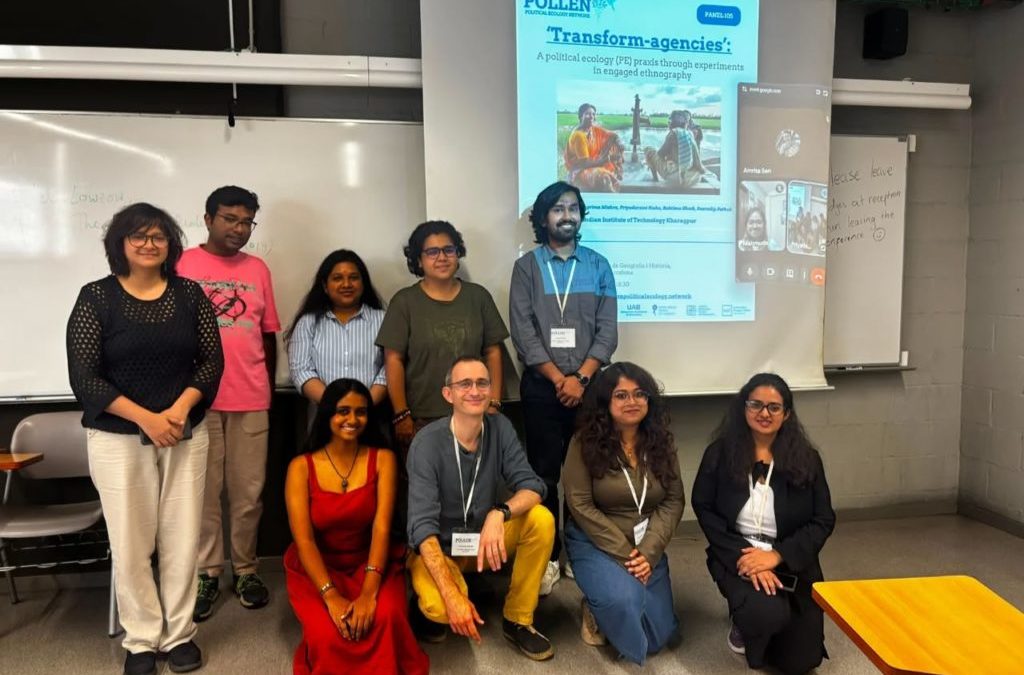
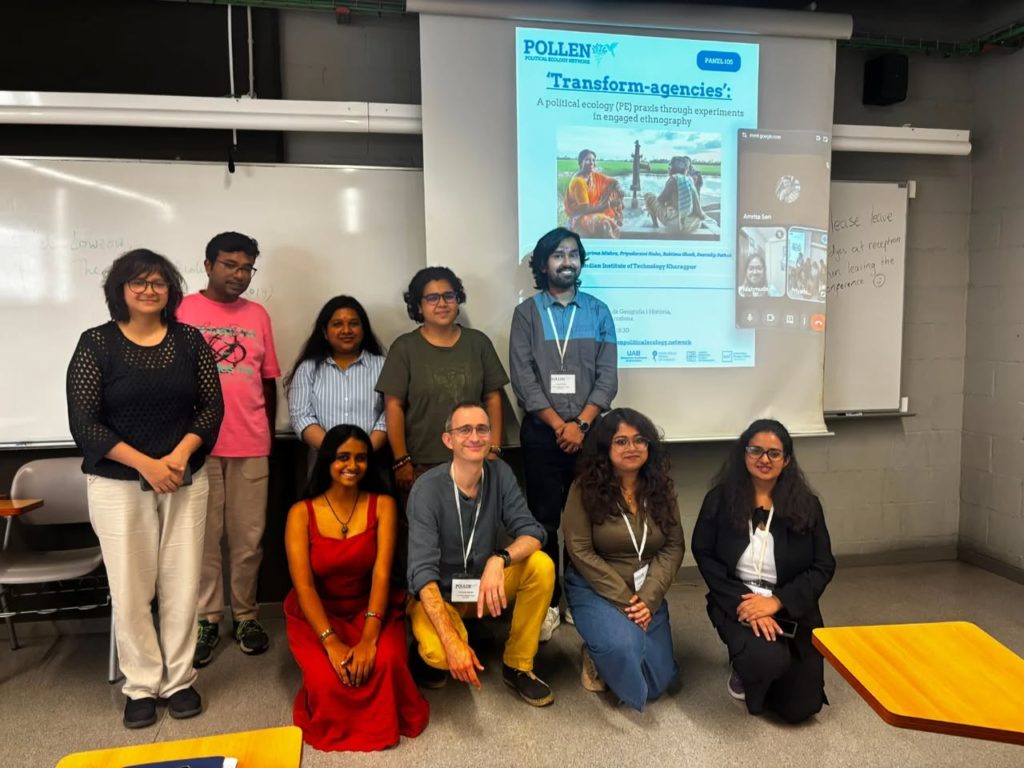
Jenia Mukherjee (Indian Institute of Technology Kharagpur) Agrima Mishra (Indian Institute of Technology Kharagpur) Priyadarsini Sinha (Indian Institute of Technology Kharagpur) Souradip Pathak (Indian Institute of Technology Kharagpur) Raktima Ghosh (Indian Institute of Technology Kharagpur) Send message to Convenors
Format: Panel Location: UB-205 Facultat de Geografia i Història Sessions: Friday 3 July, –, –
‘Transform-agencies’: A political ecology (PE) praxis through experiments in engaged ethnography . Panel P105 at conference Pollen2026: Diverse Origins, Multiple Futures: The Stories of Political Ecology.
Built on sharp theoretical insights and critical empirical studies interrogating grave odds around rights, justice, identity, and agency across scales, PE has reflected on ideas, events, perceptions, processes which relate the questions of power. But who are the listeners? How does the concept of praxis, aligning with community participation and engagement beyond academia, as well as responses from more-than-human beings, interact with methodological experiments? How can key challenges at the intersection of PE and transdisciplinary research be addressed? In fact, disciplinary barriers at the academic level and the transdisciplinary need at the practical level pose major challenges to socio-ecological research, especially in addressing ‘wicked problems’ today.
This panel invites submissions on inclusive, innovative, participatory methodological experiments to better recognize, ascribe meanings to and actively respond against power equations entrenched in social-ecological systems. We seek cutting-edge, creative approaches—from participatory cartography, sensory ethnography, photovoice to transdisciplinary collaborative practices—that challenge traditional research hierarchies and foster engagements. We provoke conversations about how such methodological approaches, by blurring the boundaries between the researcher and the researched, can reimagine and reframe the notions of participation, accountability, entitlement within the framework of PE and thereby, can become ‘acts’ for social-environmental justice. We invite researchers, practitioners and transdisciplinary consortiums to share experiences of their methodological experiments and critically reflect on how those experiences can craft the pathways of PE research. The panel is interested in exploring challenges, possibilities, apprehension, and impediments surrounding the experiments and engagements to have ideas about the efficacy of transdisciplinarity in PE. It aims to create a space, crafting a dialogue between transdisciplinarity and political ecology through critical reflections on the challenges of transdisciplinary praxis (institutional barriers, epistemic conflicts, and ethical dilemmas), while assessing its potential to deepen PE’s transformative impact.
POLLEN 2026: ENGAGE and ResEaux and jointly organise the panel « Rivers, Power, and Resistance: Political Ecology and Transformative Water Governance in South Asia »
Emilie Cremin (UNIL University of Lausanne) Johan Krieg (Paris Nanterre University)
Chairs:
Emilie Cremin (UNIL University of Lausanne) Johan Krieg (Paris Nanterre University)
Discussants:
Vinita Damodaran (University of Sussex) Rahul Ranjan (School of GeoSciences, University of Edinburgh) Jenia Mukherjee (Indian Institute of Technology Kharagpur) samiya Selim (University of Liberal Arts Bangladesh)
Rivers, Power, and Resistance: Political Ecology and Transformative Water Governance in South Asia. Panel P057 at conference Pollen2026: Diverse Origins, Multiple Futures: The Stories of Political Ecology.
This panel will be based on paper presentations and discussions led by panel conveners, followed by Q&A with the audience.
Long Abstract
Rivers in South Asia are not just ecological systems—they are sites of power, identity, and resistance. This panel, grounded in political ecology, examines how infrastructures and discourses of river management—dams, river-linking projects, sacralized waterways—become instruments of state-making, ideological control, and contested visions of development. Hydrosocial interventions often reinforce caste, class, and religious hierarchies while eroding vernacular knowledge and undermining local ecological autonomy.
Environmental governance across the region is increasingly ideological. Nationalist and authoritarian regimes deploy rivers to craft homogenised narratives of nationhood, while civil society actors face mounting surveillance, repression, and financial barriers such as India’s Foreign Contribution Regulation Act. Yet alongside these pressures, subaltern actors—indigenous communities, women, Dalit groups, and environmental activists—mobilize alternative practices that challenge dominant hydrosocial regimes and open space for more inclusive and ecologically just futures.
This panel invites contributions from across the social sciences and humanities that engage the politics of rivers and water governance in South Asia. Topics include: river management and state formation; purity, cleanliness, and security discourses; subaltern strategies of resistance; the analytical contributions of political ecology; and the geopolitical dimensions of transboundary river governance. We particularly welcome work exploring how local knowledge and participatory approaches can reconfigure hydrosocial territories to confront climate change, address inequalities, and restore degraded aquatic ecosystems.
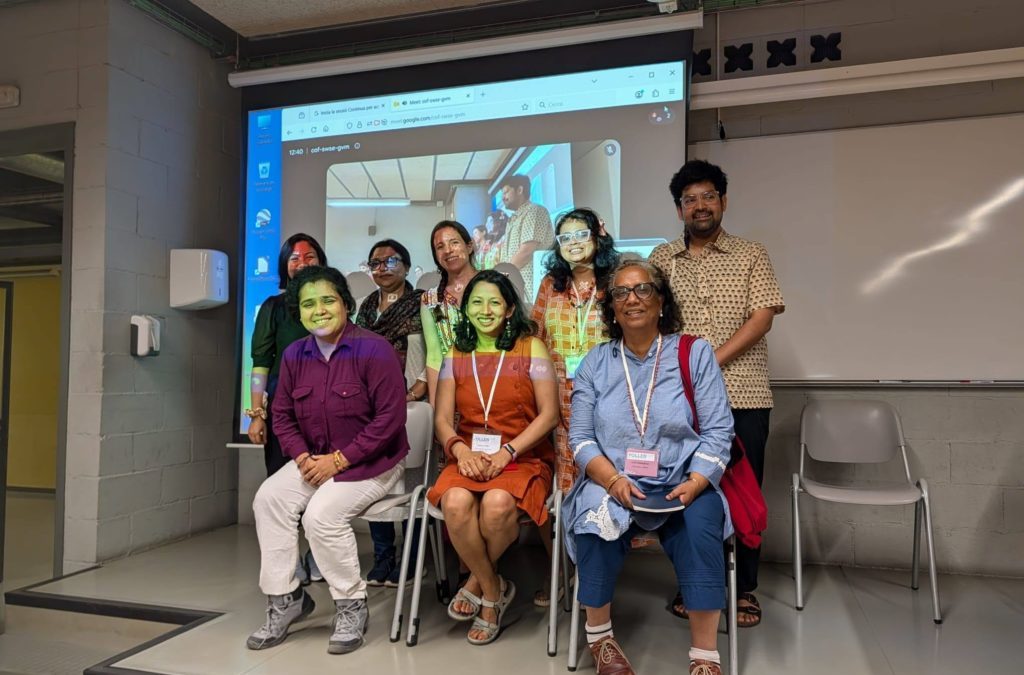
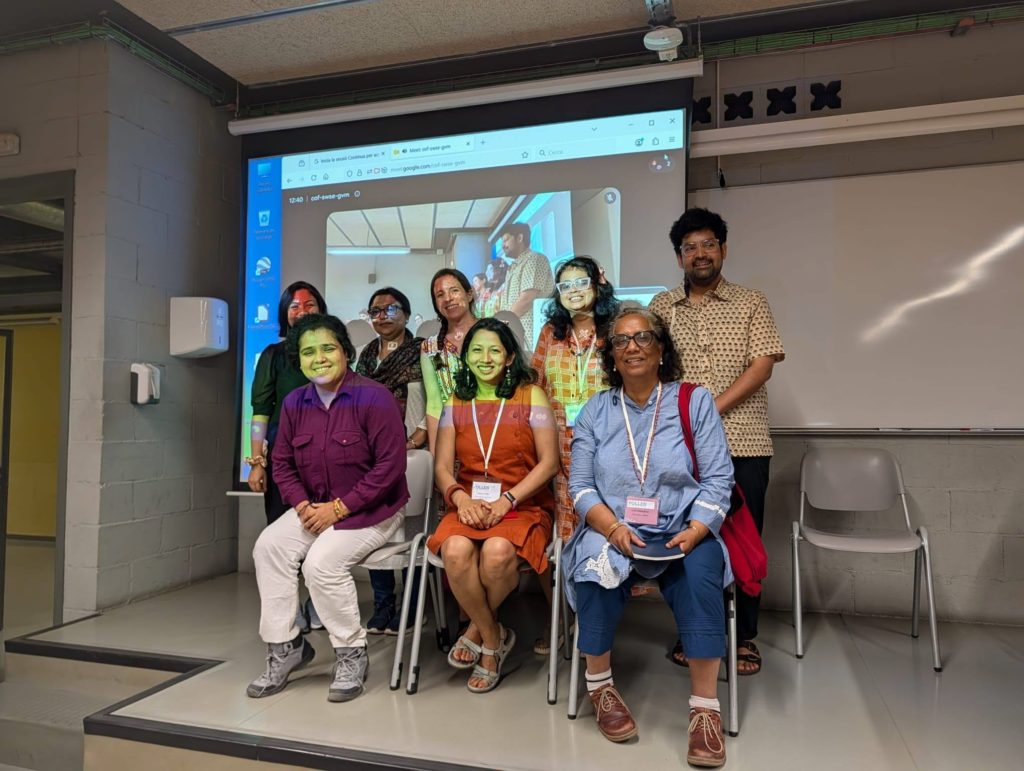
Johan Krieg and Emilie Cremin have organised the panel « Rivers, Power, and Resistance: Political Ecology and Transformative Water Governance in South Asia » on the 2d of July 2026 at the Pollen 2026 conference in Barcelona.
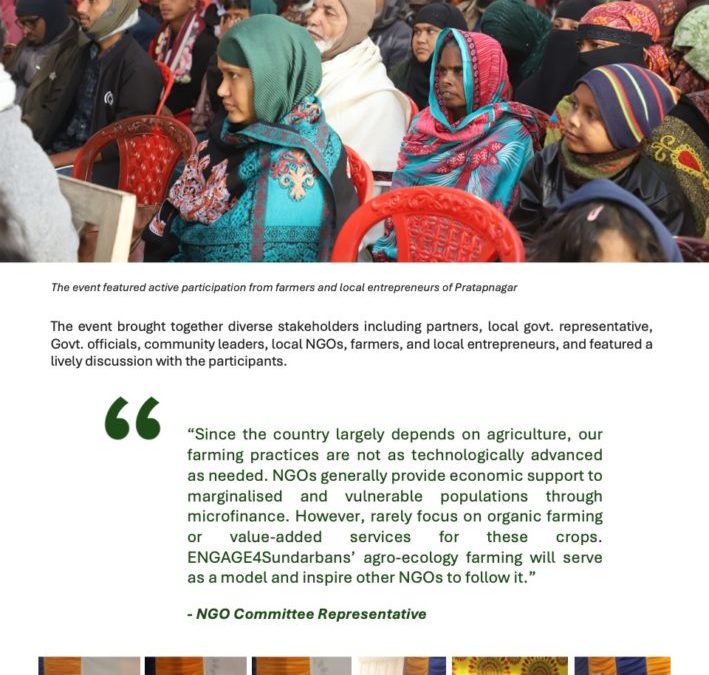
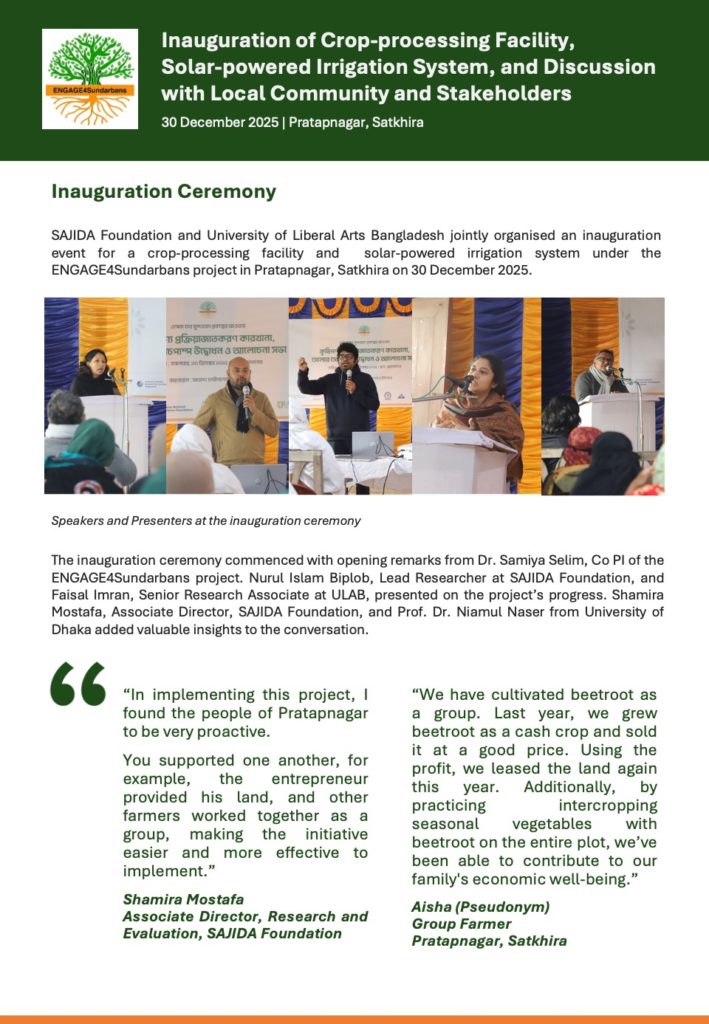
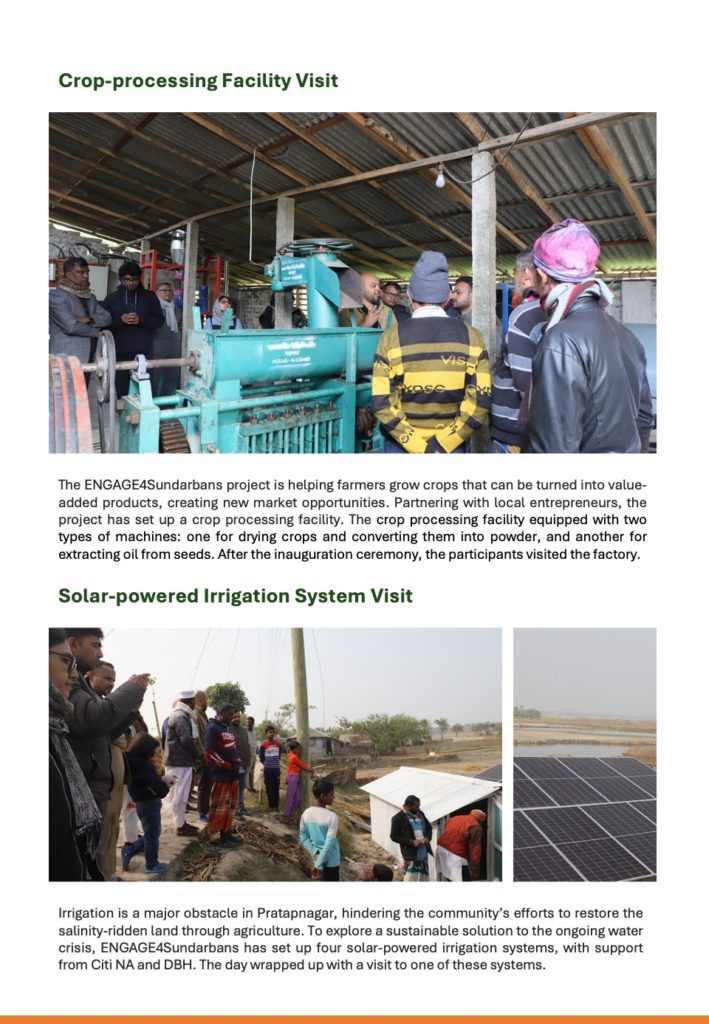
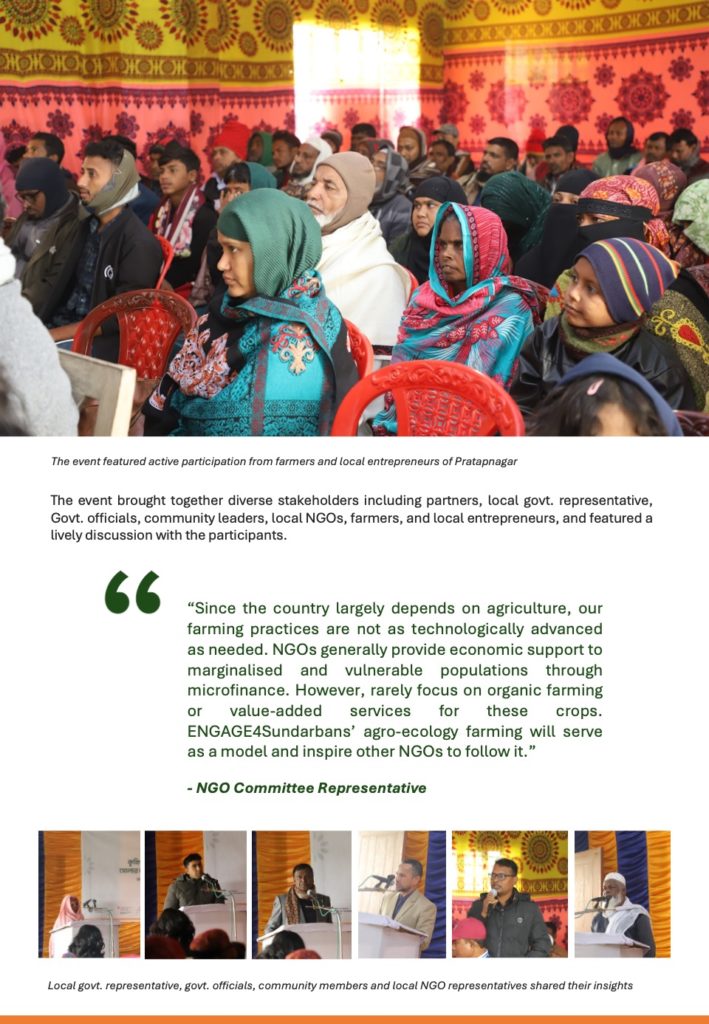
SAJIDA Foundation and the University of Liberal Arts Bangladesh jointly organised an inauguration event for a crop-processing facility and a solar-powered irrigation system under the ENGAGE4Sundarbans project in Pratapnagar, Satkhira, on 30 December 2025, attended by the local community, government officials, NGO representatives, and other stakeholders.
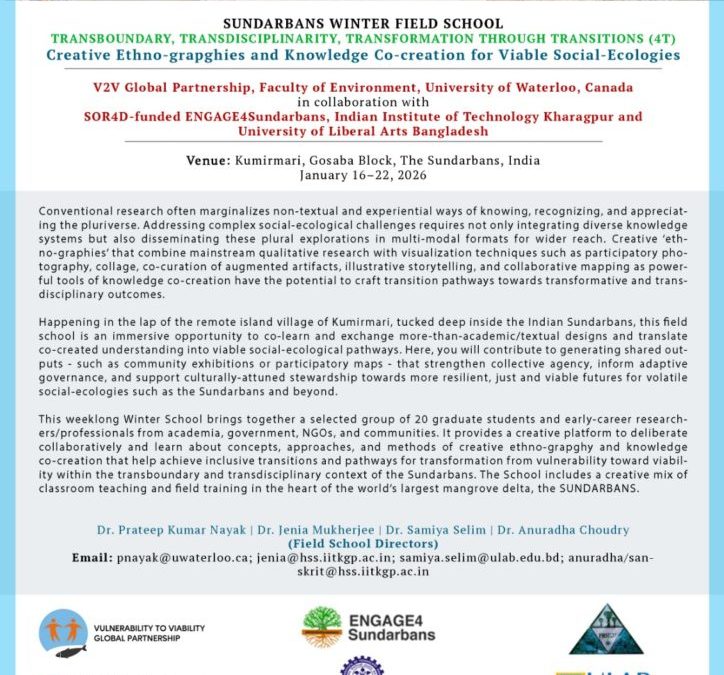
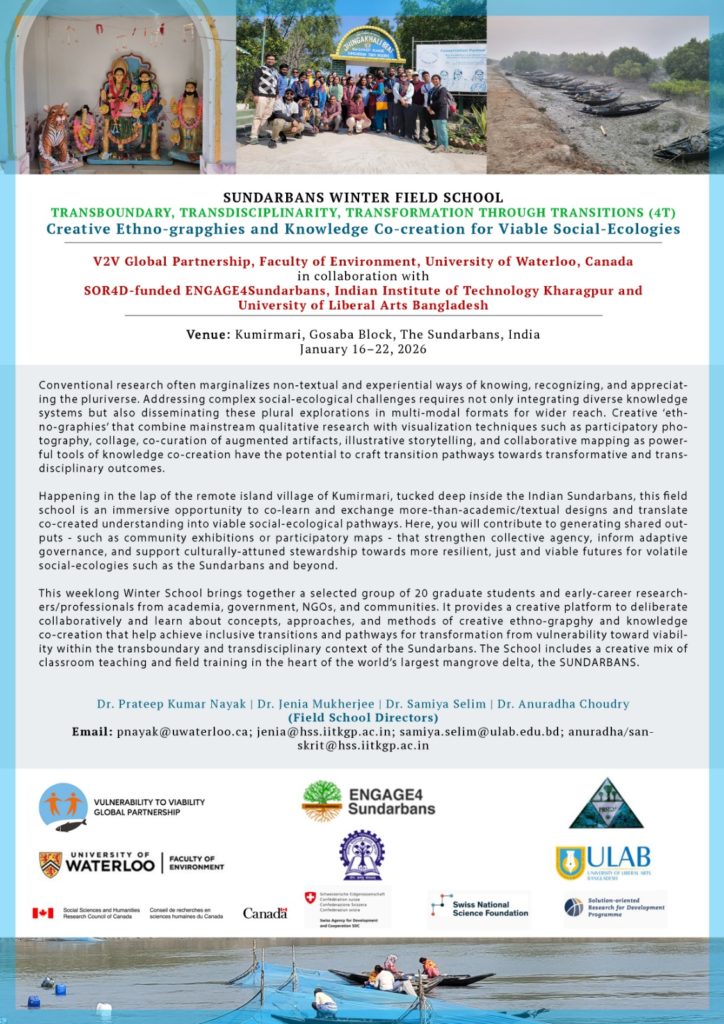
The 3rd Sundarbans field school will take place from the 16th to the 22d of January 2026.
TRANSBOUNDARY, TRANSDISCIPLINARITY, TRANSFORMATION THROUGH TRANSITIONS (4T)
Creative Ethno-grapghies and Knowledge Co-creation for Viable Social-Ecologies
V2V Global Partnership, University of Waterloo, Canada in collaboration with SOR4D-funded ENGAGE4Sundarbans, Indian Institute of Technology Kharagpur and University of Liberal Arts Bangladesh
Venue: Kumirmari, Gosaba Block, The Sundarbans, India
January 16–22, 2026
Conventional research often marginalizes non-textual and experiential ways of knowing, recognizing, and appreciating the pluriverse. Addressing complex social-ecological challenges requires not only integrating diverse knowledge systems but also disseminating these plural explorations in multi-modal formats for wider reach. Creative ‘ethno-graphies’ that combine mainstream qualitative research with visualization techniques such as participatory photography, collage, co-curation of augmented artifacts, illustrative storytelling, and collaborative mapping as powerful tools of knowledge co-creation have the potential to craft transformative transdisciplinary outcomes.
Happening in the lap of the remote island village of Kumirmari, tucked deep inside the Indian Sundarbans, this field school is an immersive opportunity to co-learn and exchange more-than-academic/textual designs and translate co-created understanding into viable social-ecological pathways. Here, you will contribute to generating shared outputs – such as community exhibitions or participatory maps – that strengthen collective agency, inform adaptive governance, and support culturally-attuned stewardship towards more resilient, just and viable futures for volatile social-ecologies such as the Sundarbans and beyond.
This weeklong Winter School brings together a selected group of 20 graduate students and early-career researchers/professionals from academia, government, NGOs, and communities. It provides a creative platform to deliberate collaboratively and learn about concepts, approaches, and methods of creative ethno-grapghy and knowledge co-creation that help achieve inclusive transitions and pathways for transformation from vulnerability toward viability within the transboundary and transdisciplinary context of the Sundarbans. The School includes a creative mix of classroom teaching and field training in the heart of the world’s largest mangrove delta, the SUNDARBANS.
Dr. Prateep Kumar Nayak I Dr. Jenia Mukherjee I Dr. Samiya Selim I Dr. Anuradha Choudry
ENGAGE4 Sundarbans receives LIVING WITH RIVERS LABEL
“A Label that speaks of possibilities and shares enthusiasm!”
Erik Orsenna, IGFR President
In line with the first international action, Living with Rivers 2022, IFGR is continuing to promote actions in the field for the Future of Rivers!
In 2024, IFGR is setting up with its expert committee the first International River Initiatives Label.
This label aims to highlight positive initiatives and tell of the commitment ofactors rooted in the territories in response to the significant challenges facing rivers. Reference indicators established by the IFGR expert committee are used to select initiatives in France and abroad, within a systemic and multidisciplinary framework that takes into account uses.
This multidisciplinary approach opens the selection to an extensive range of initiatives whose expected goals and impacts should strengthen the sustainability of rivers, their territories and their populations.
We intend to provide support to the contributors of initiatives as closely as possible to their needsand to facilitate their actions (financial prizes for the 3 winners, contributions of expertise and visibility, networking, etc.).
We are convinced that it is by action in the field that we can make an impact collectively and inspire other actors. Therefore, we want to place ourselves in the service of those who act concretely in the territories.
Our intention is to provide support to the contributors of initiatives as close as possible to their needs, and facilitate their actions (financial prizes for the 3 winners, the contribution of expertise and visibility, networking, etc.).
We are convinced that it is by action in the field that we can make an impact collectively and inspire other actors. Therefore, we want to place ourselves in the service of those who act concretely in the territories.