Methods
Our Works
Explore our methodology utilized to explore the interplay of socioeconomic and cultural dynamics in the Sundarban deltas and reflect this richness in sustainable implementation practices.
 Comprehending the past to rebuild towards a transformative future.
Evaluating the region’s climate vulnerabilities rely on comprehending pre-existing records relevant to natural disasters and infectious diseases. Digitizing and creating archives for these records revealed that past colonial governance neglected indigenous knowledge and practices, opting for development and commercialization that further harmed the Sundarbans.
 Trust-building and evaluating current capacities.
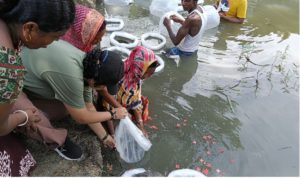
We lived among the community to understand local realities and livelihoods. This includes incorporating the Sundarbans’ heritage through local folklore and audiovisual records. Our understanding of the communities in Sundarban were further enriched by participatory practices, observing the community’s agricultural customs while creating focus group discussions and semi-formal on-site conversations. Ethnography methodology has identified community priorities, such as:
The preference for a nonmigratory lifestyle, rooted in stable agroecology opportunities.
Self-governance and sufficiency accompanied by substantial policymaking power.
Ecosystem restoration due to a large portion of cultural identity deriving from the ecology of the Sundarbans.
 Co-led by inhabitants within the Sundarbans to address local priorities.
We co-designed a digital household survey with community members to ensure a reflection of local priorities. 380 households were surveyed across Kumirmari and Assasuni, with inhabitant interviewers– four women and three men who were internal community members– further empowering community governance and independence. To ensure digital literacy, interviewers received training on survey delivery and digital app usage.
 Transforming traditional systems of power.
We shift typical research power from academia to the actual community, collaborating with and centering their insights throughout the process. Community members were able to select initiatives they perceived as most beneficial while also inputting their own perspectives about existing vulnerabilities that guided our work. Examples of the co-construction process include participatory selection processes and implementation committees that would vote in ENGAGE workshops and conduct household surveys along canals.
 Building policymaking power and endorsing community voices.
Policies we assessed pertained to the transition from shrimp (‘gher’) farming to sustainable agriculture practices, focusing on the community’s campaign for shrimp farm bans. This allowed for an adoption of salt-tolerant crops and mixed farming methods, shifting to greater ecosystem restoration and market opportunity. These policy analyses guide opportunities for stronger engagement with local government.