On 3 July 2026, in a classroom of the Faculty of Geography and History at the University of Barcelona, researchers from different corners of the world gathered around a question that sits at the heart of the ENGAGE project: who is transformative research for, and who gets to take part in it?
The occasion was Panel P105, ‘Transform-agencies’: A political ecology (PE) praxis through experiments in engaged ethnography, convened by ENGAGE team members from IIT Kharagpur at POLLEN 2026, the Political Ecology Network conference on “Diverse Origins, Multiple Futures”. The panel brought together researchers working across South Asia and beyond to reflect on how methodological experimentation can reshape relationships between knowledge, power and action.
About the panel
The conversation was closely connected to a central premise of ENGAGE: resilience cannot be built through solutions imposed from outside; it has to grow from situated knowledge, lived realities and sustained engagement among communities, researchers, practitioners and institutions. ENGAGE approaches the Sundarbans as a complex social-ecological system and works towards understanding its plural ‘riskscapes’ while supporting situated adaptive practices through transdisciplinary knowledge co-production. Its living-lab approach brings historical ethnographic inquiry into conversation with experimentation, allowing research to move between understanding, learning and action. It was this movement – from research about communities towards research with and alongside them – that the POLLEN panel sought to make visible. The panel’s starting point was political ecology’s longstanding concern with power, rights, justice, identity and agency, but it also asked a more reflexive question: who gets to produce knowledge, who gets to listen, and what kinds of relationships are created through the research process? The panel therefore foregrounded participatory cartography, sensory ethnography, photovoice, visual practices and transdisciplinary collaboration as more than methodological techniques. They were considered possible ways of unsettling conventional research hierarchies and opening space for different forms of participation, accountability and agency.
Layout and presentations
Presentations addressed collaborative knowledge-making and future-making; coastal dispossession and development frontiers in Bangladesh; fishworkers’ activism in West Bengal; ‘inhabitant interviewers’ and agroecological transitions in the Indian Sundarbans; human–more-than-human entanglements; comics and speculative political ecology; photographic and interdisciplinary collaborations; brackish-water governance; informal street vending; participatory and visual methods; sound art; and youth-led climate praxis. These studies suggested that transformation can emerge through seemingly modest shifts in how research is conducted—who asks the questions, whose senses and stories are taken seriously, what forms knowledge takes, and how research relationships are sustained.
The panel’s format was itself an experiment in this spirit. Rather than treating presentations as discrete pieces of knowledge, the convenors created opportunities to connect them. Participants used a shared Miro board to map recurring themes, approaches and methodological possibilities across the presentations. The second session culminated in a roundtable organised around four questions: which concepts need rethinking; which methods deserve further experimentation; where opportunities for transformative research might lie; and what collaborations could emerge from the conversation. The intention was not to arrive at a single definition of transformative research, but to create a space where its possibilities could be collectively explored. Sessions were designed as conversation rather than a procession of talks. Short pauses invited reflection on what kind of praxis each study practised. The day closed with a roundtable on concepts needing rethinking, methods deserving experimentation, opportunities for transformative research, and collaborations taking shape.
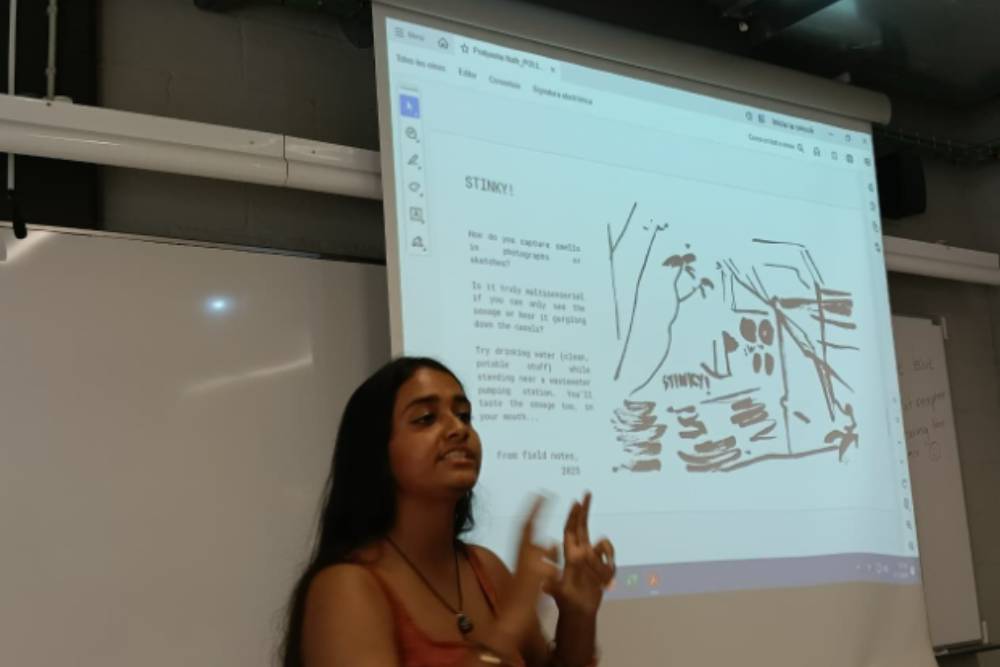
“Stinky!”: a page from field notes asks how smell can be captured in images
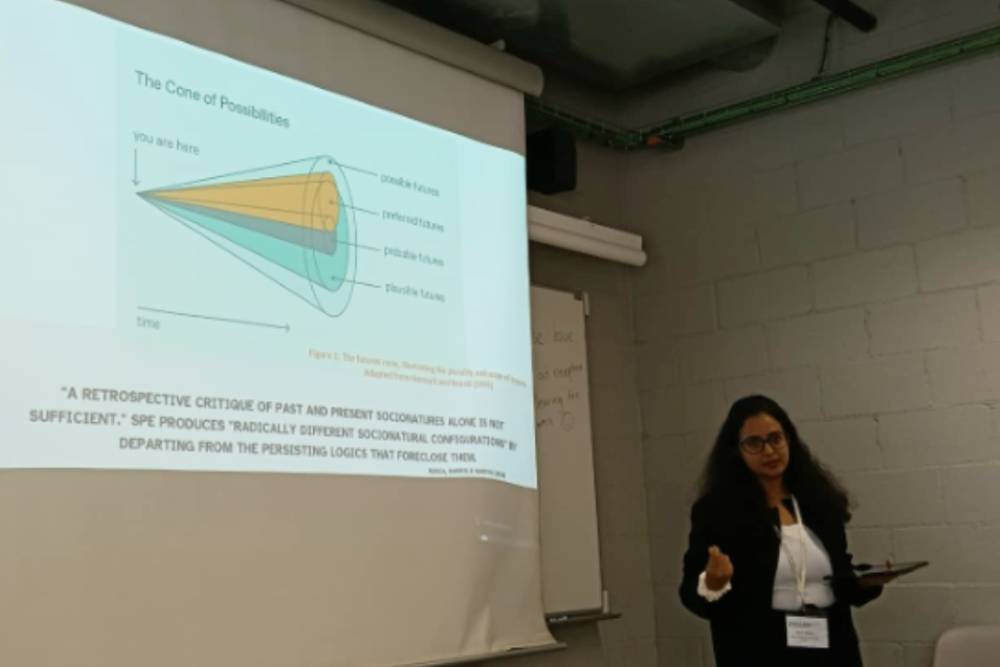
The “cone of possibilities” framed a discussion of speculative political ecology
Carrying forward
The exchange in Barcelona also reinforced an important aspect of ENGAGE’s work: transformation is not necessarily synonymous with scale, novelty or a ready-made solution. It can begin with recognition—with taking local knowledge seriously, making visible practices that are often overlooked, and creating relationships through which different actors can learn from one another. It can also involve uncertainty, negotiation and reflexivity: recognising that transdisciplinary work brings institutional barriers, epistemic differences and ethical questions alongside its possibilities. For ENGAGE, then, the panel was more than an opportunity to present project experiences to an international political-ecology audience. It was a way of carrying the project’s questions outward and bringing new questions back. By placing the everyday practices of knowledge co-production, experimentation and engagement in dialogue with diverse political-ecology experiences, the panel opened a wider conversation about what research can do. At its heart was a simple but demanding proposition: if the socio-ecological futures we seek are more just and resilient, perhaps the processes through which we produce knowledge about them must also become more collaborative, reflexive and transformative.
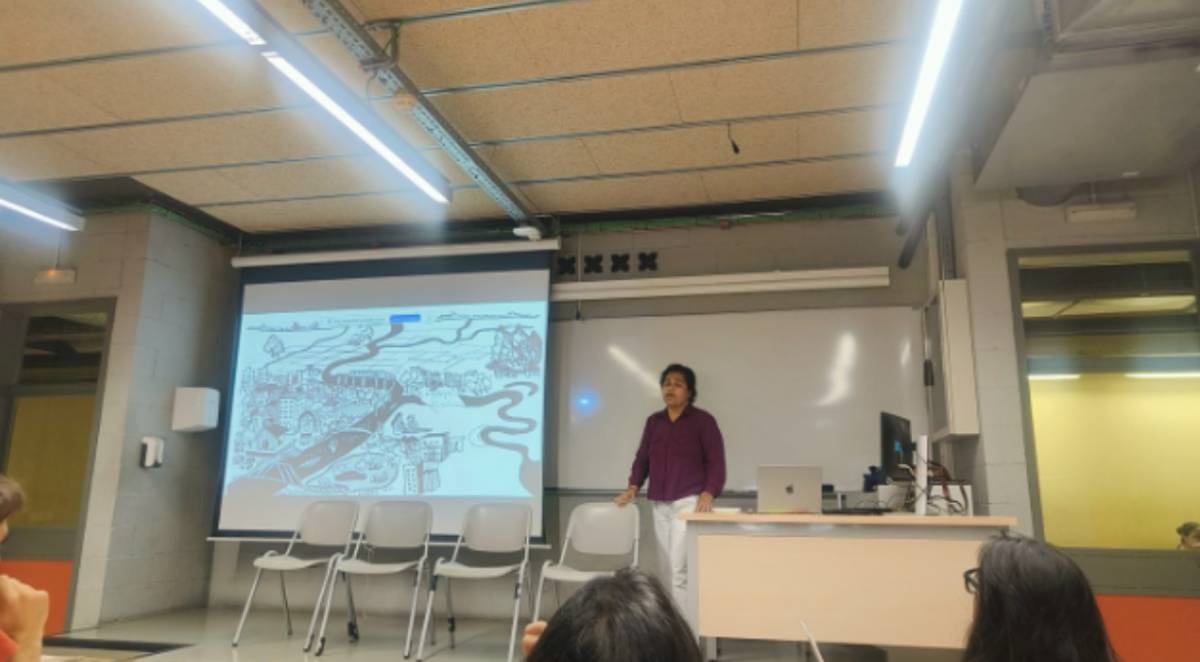
A hand-drawn riverine landscape on screen
The researchers left Barcelona with new questions, new collaborators and a shared sense that praxis begins with listening. These conversations will keep shaping how ENGAGE works with communities across the Sundarbans.