by ShahJahanSiraj | Nov 11, 2026 | News Hub, Training Module
“What’s the use of another training module? Numerous manuals are produced and distributed to us as a gimmick of capacity building. But seldom is our knowledge documented and our voices heard!” This fiery remark from a community representative from Bangladesh left a lasting impression on the ENGAGE team, who then felt the need to produce materials that are meaningful to people on the ground. SOR4D-funded ENGAGE4Sundarbans and its precursor Swissnex-funded CLOC-K2A provided the opportunity to experiment with visual storytelling as a method for coproducing an inland fishing training module that could be widely accepted by small-scale pond fishers and others.
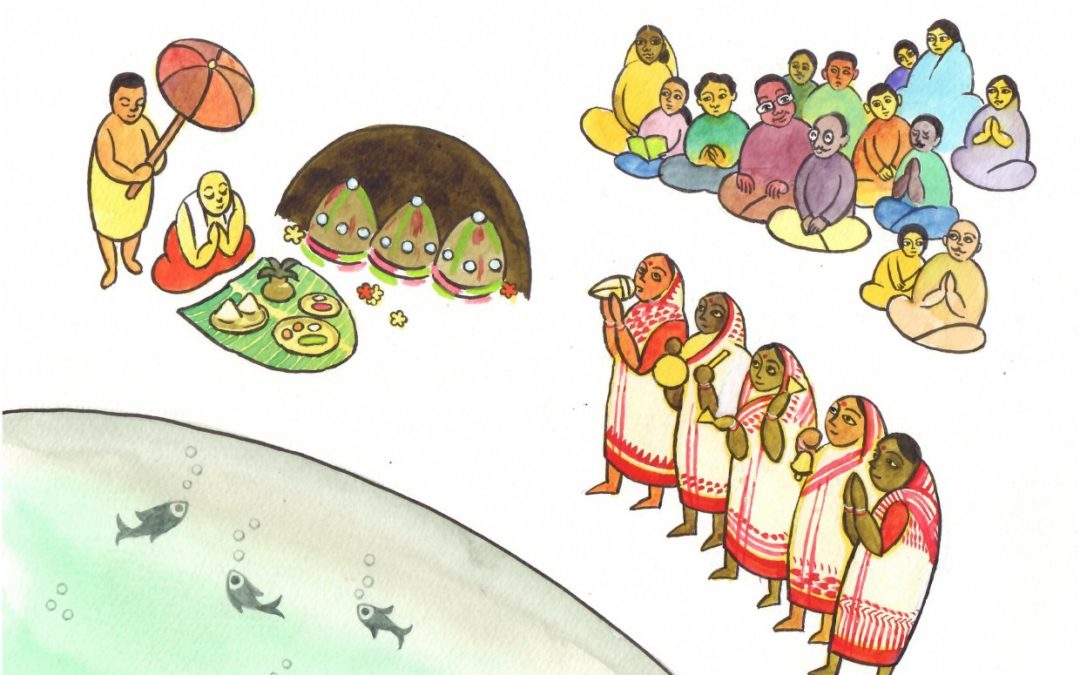
Pukure Mach Chash: Katha O Kahini is a visually re/told fisheries manual that stitches together facts and figures from the deployment of an array of qualitative methods (adda, focus group discussions, key informant interviews and knowledge co-production exercises), involving local fishers, panchayat members, fisheries scientists and academics. The visual language was co-designed. The women fishers rejected early colour choices as “too formal, too detached and too urban”, and asked for the greens, reds and yellows of their own world, along with local motifs and corrections to how water and figures are drawn. In this way, vernacular and scientific knowledge sit on the same page, and the community’s visual culture becomes a way of doing science, made by visual artist Pratyasha Nath and the storyteller Jenia Mukherjee.
Viewers can access the module by clicking this into the link: (PDF | 24MB)
by ShahJahanSiraj | Oct 20, 2026 | Resources
Training module: “Pukure Mach Chash: Katha O Kahini”
“What’s the use of another training module? Numerous manuals are produced and distributed to us as a gimmick of capacity building. But seldom is our knowledge documented and our voices heard!” This fiery remark from a community representative from Bangladesh left a lasting impression on the ENGAGE team, who then felt the need to produce materials that are meaningful to people on the ground. SOR4D-funded ENGAGE4Sundarbans and its precursor Swissnex-funded CLOC-K2A provided the opportunity to experiment with visual storytelling as a method for coproducing an inland fishing training module that could be widely accepted by small-scale pond fishers and others.
Pukure Mach Chash: Katha O Kahini is a visually re/told fisheries manual that stitches together facts and figures from the deployment of an array of qualitative methods (adda, focus group discussions, key informant interviews and knowledge co-production exercises), involving local fishers, panchayat members, fisheries scientists and academics. The visual language was co-designed. The women fishers rejected early colour choices as “too formal, too detached and too urban”, and asked for the greens, reds and yellows of their own world, along with local motifs and corrections to how water and figures are drawn. In this way, vernacular and scientific knowledge sit on the same page, and the community’s visual culture becomes a way of doing science, made by visual artist Pratyasha Nath and the storyteller Jenia Mukherjee.
Practice-based (bilingual) training modules
The transdisciplinary Indian team realized the significance of developing knowledge outputs in the form of practice-based (bilingual) training modules in inland fisheries with infographics and sketches, accommodating inputs from fishers and cross-feeding with (mainstream) scientific information and standard practices.
by emilie.cremin@gmail.com | Sep 14, 2026 | Online Courses, Previous Events, Resources
Under the overarching theme “Advancing Transdisciplinary Research for Global Development: Crisis, Collaboration, and Change”, the conference explores how research can respond to current global challenges and contribute to sustainable and scalable solutions. https://www.sor4d.ch/en/V6kPVrvBJtdM3hy4/event/sor4d-research-conference-2026
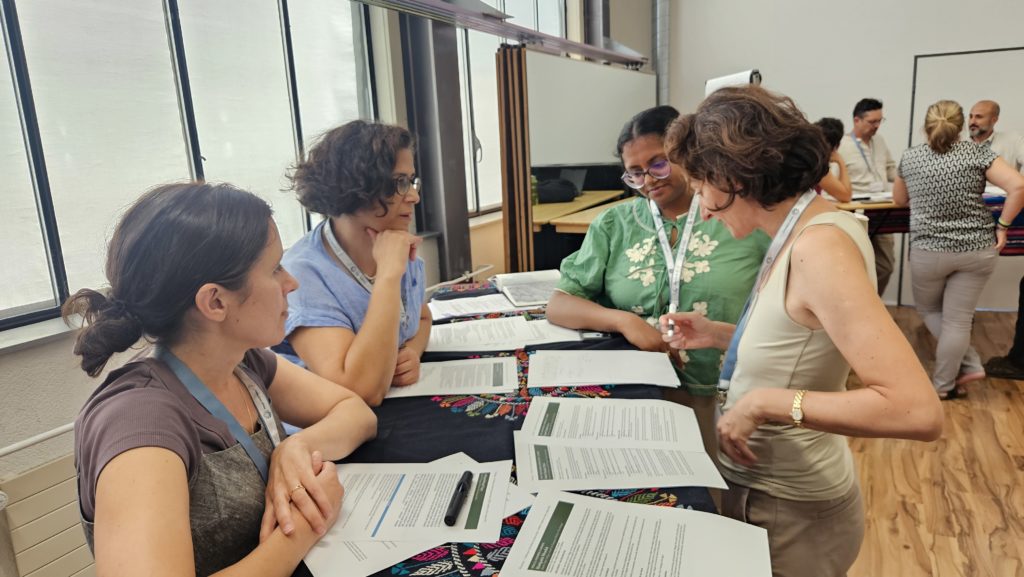
WS 4 Workshop | 11:15–12:45 The Real-world lab workshop: Challenges of scaling-up agroecology
Lead: Emilie Cremin, University of Lausanne, Switzerland | Jinat Hossain, University of Bern, Christophe Gironde, IHEID | Shirisha Junuthula, CSA, and Lucile Mougeat, UNIGE
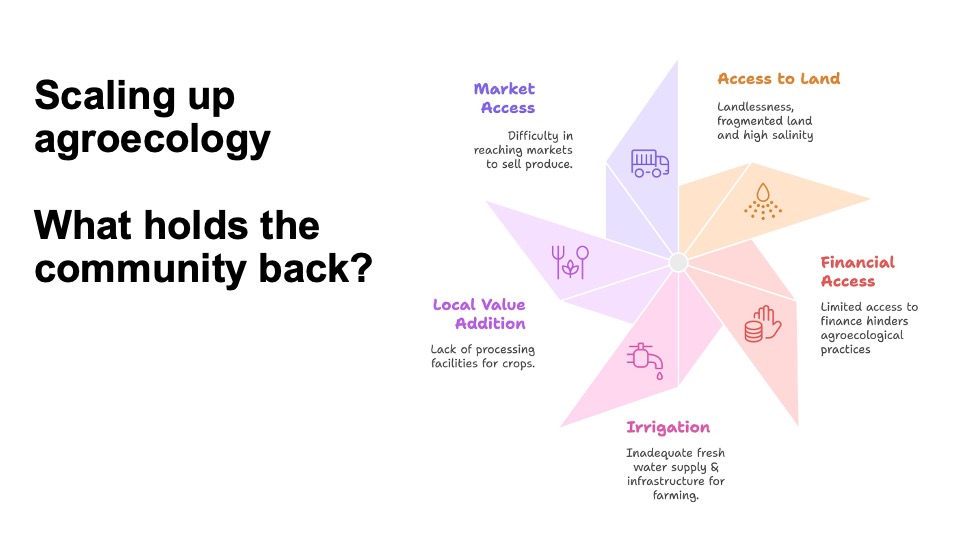
Abstract: This workshop will involve participants in reflecting on the challenges small farmers face in many parts of the world when willing to implement agroecological solutions. Participants will review the laws and policies governing land access. They will experiment with the challenges posed by environmental conditions, socio-economic conditions, and power relations that underpin the governance of land and water, access to bio-inputs, value addition to their products, and access to consumers and the market. The game is set within multiple disruptive risks (climate change as a ‘wicked problem’) in different spaces and places.
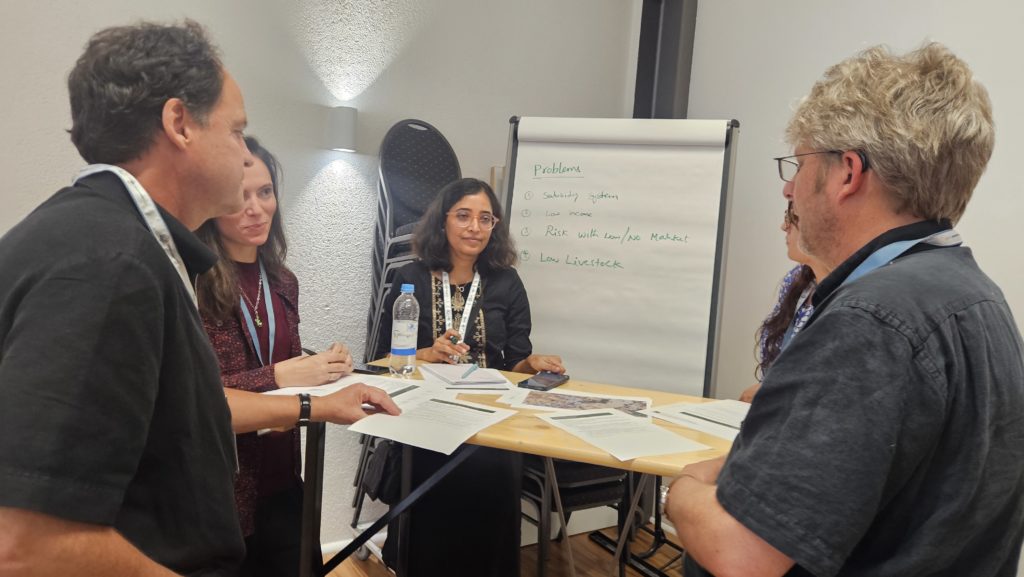
Objectives of the game: The participants take the role of a stakeholder and will have to exchange their perspectives on environmental and livelihood issues they are facing. They will elaborate on sustainable solutions.
Organisation: 4 tables of 4 to 10 people, each table elaborate on one case study
Material available
• 4 site profiles of each type of stakeholder, including farmers and their farms and explaining their constraints and solutions inspired by SOR4D projects
• Local profiles for each site, presenting the economic and social constraints (one page for each profile)
• Mapping of the sites: 4 large maps (A0 format)
Your role
Phase 1: Present the main issue and the perspective on the issue by each stakeholder
Phase 2: Prepare 3 scenarios per sites
Both on an A0 flipchart
Session duration = 90 minutes
Organisation / timing of the game
• 10′: presentation of the game and rules
• 40′: Discussions around the tables/ 5 to 8 participants? 5 minutes per profile.
o 20’ Phase 1 (present yourself to the other players and present the main issue from each one perspective) /
o 20’ Phase 2 (Prepare 3 scenarios: elaborate solutions altogether)
• 10′: preparing synthesis of the RT to be presented in plenary
• 30′: Plenary to present each Living labs (5′ each) on poster
4 case studies selected in our SoR4D projects
1- Indian Sundarbans: Forest management and livelihoods lead by Emilie Cremin
2- Bangladesh Sundarbans: Shrimp and disaster management lead by Jinat Hossain
3- Andhra Pradesh: Paddy and horticulture – bioinputs lead by Shirisha Junuthula
4- Bolivian Altiplano: vegetables – irrigation – commercialization lead by Christophe Gironde and Lucile Mougeat
Participants will assume the roles of various actors in the field to identify the challenges of implementing and scaling up agroecological solutions.
by Shimim Mushsharat | Jul 8, 2025 | News Hub, Resources
Rahima Khatun’s life has been shaped by challenges. She lives with her husband, one of her sons, his wife, and their child. Her two other sons have married and moved out. Her husband, now elderly, is unable to work much, and the son who lives with them is only able to earn seasonally. Together, their incomes are not enough to support the family of five.
With no land in their name, they faced not just financial uncertainty but also a lack of food security.
But Rahima is not one to be intimidated by obstacles. Through sheer determination and persistence, she turned her hardship into an opportunity.
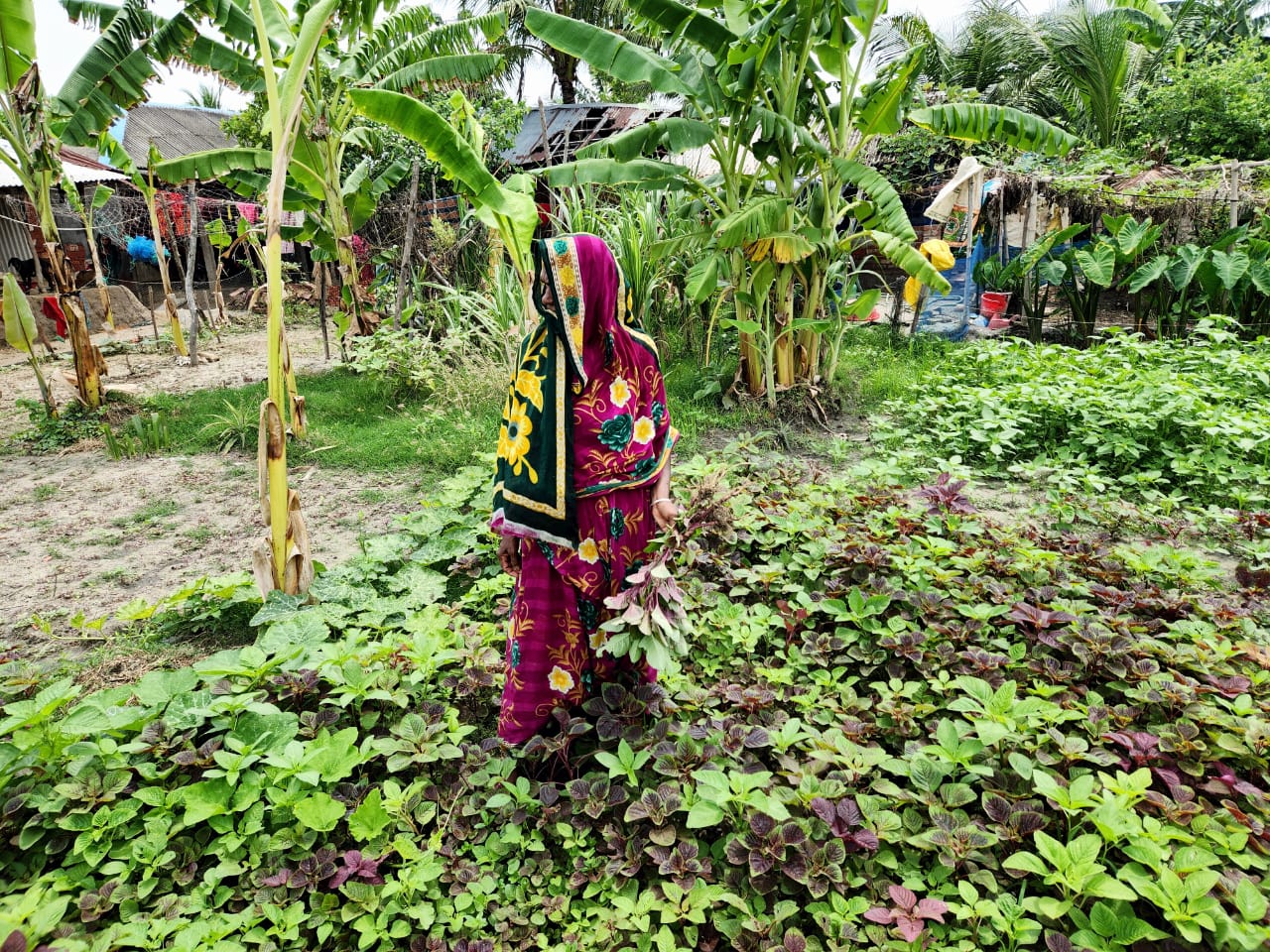
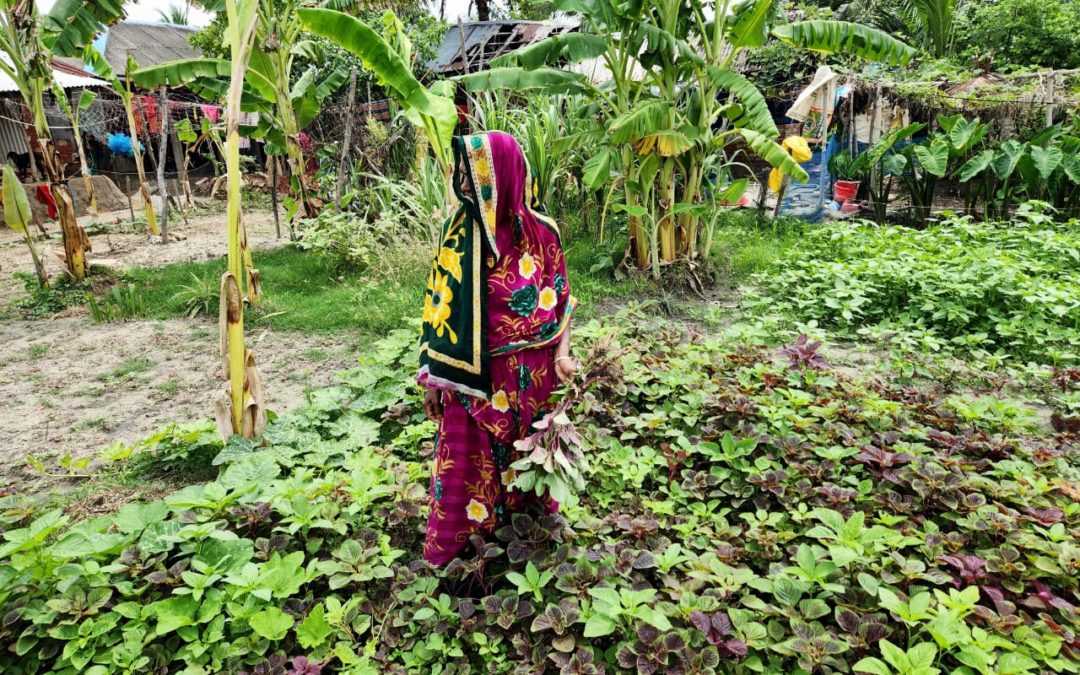
Rahima Khatun grows a multitude of vegetables on her yard.
A Natural Leader in the Field
When SAJIDA Foundation’s ENGAGE4Sundarbans project started its ethnographic research, Rahima was selected as research participant due to her involvement with agriculture. She spoke candidly during interviews, sharing her farming knowledge and the struggles that came with having limited land and financial resources.
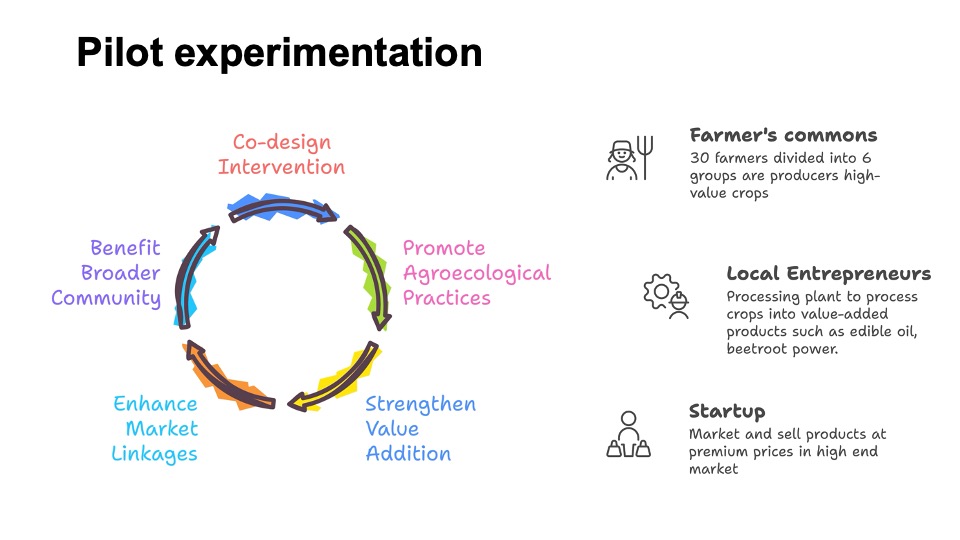
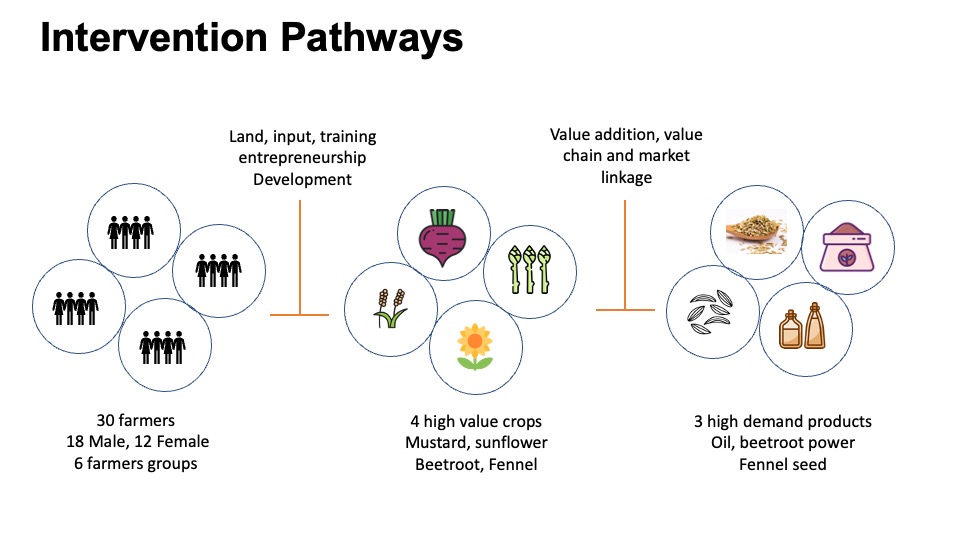
From the beginning, Rahima was determined to carve out a space for herself in her family and community. She was surprised and encouraged when she learned she had been selected to join one of ENGAGE4Sundarbans’s intervention groups testing crops with high value addition potential. She was placed in the group assigned to grow fennel along with two other female farmers.
Before long, Rahima became much more than just a participant. She took the lead in group planning, organised meetings, and became an active figure in project activities. Even her husband began to support her involvement, gradually letting go of his initial doubts.
As part of ENGAGE4Sundarban project’s group farming initiative, she now cultivates rice, grains, and vegetables on the land next to her home. In another small plot of just two decimals, she farms freshwater fish for her family’s consumption. Her yard, too, has a multitude of vegetables growing. Years ago, her elder son started building a roofed house, but financial constraints postponed the construction. Rahima, ever resourceful, transformed the unfinished structure into yet another thriving vegetable garden.
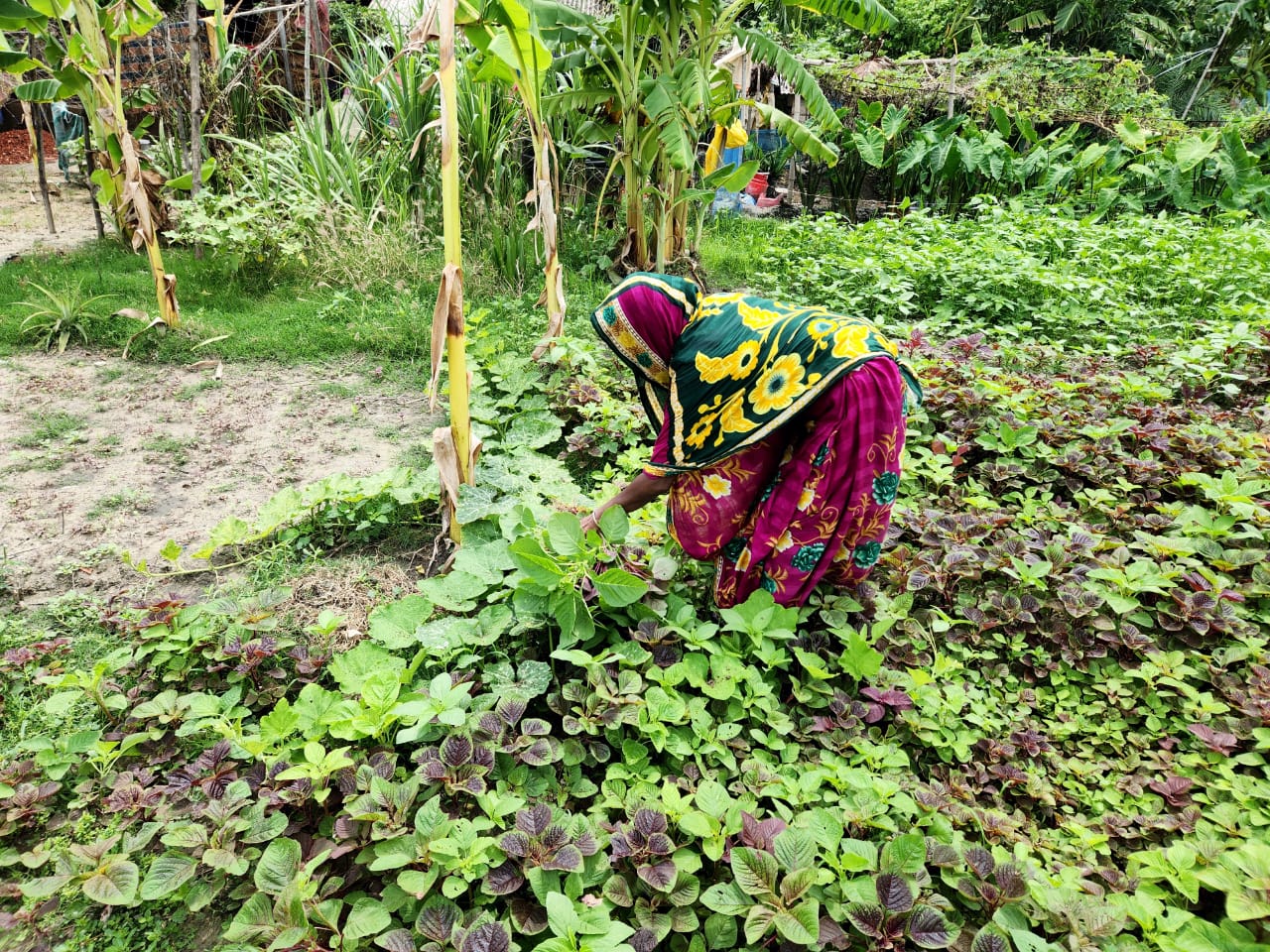
Through determination and persistence, Rahima has turned her hardship into an opportunity.
A Home Garden to Ensure Food Security
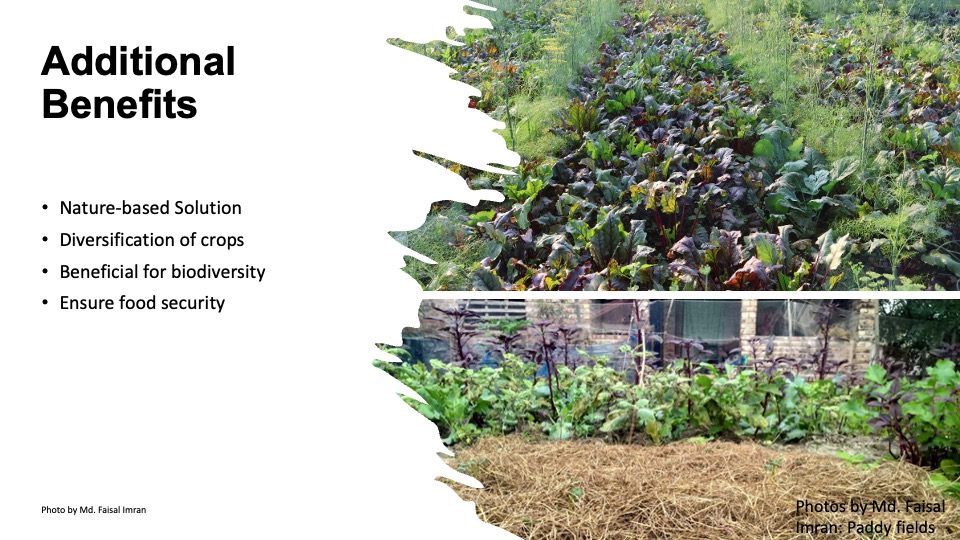
What truly sets Rahima’s farming apart is her commitment to diversity. During the monsoon, she grows Aman paddy. Once harvested, she uses the same land to plant potatoes, sunflowers, fennel, sesame, and melon during the Rabi season from Mid-November to Mid-March. In other plots, she cultivates mustard alongside red cabbage, spinach, radish, and coriander, aubergine, onions, beans, beetroot, gourd, and winter crops like spring onions, garlic, and chillies also find space in her garden. Her motivation is both practical and personal. She refuses to buy oil or vegetables from the market.
“Why spend money [on oil or vegetables] when I can grow them myself?” Rahima, a traditional farmer and participant of ENGAGE4Sundarbans project, says.
One of Rahima’s long-held dreams was to lease land in her own name, so she could grow rice without depending on others. Her wish came true when ENGAGE4Sundarbans leased land under the names of Rahima and her group members.
Looking ahead, Rahima hopes that by selling fennel in the Rabi season and vegetables during Kharif (Mid-March to Mid-November), she can earn enough to lease more land and commercially scale up her farming.

by emilie.cremin@gmail.com | Oct 10, 2024 | Integrated Farming, Resources
Integrated Farming: agriculture-aquaculture
In coastal Bangladesh, Agriculture is disrupted by salinity intrusion, tidal surges, poor soil health, water unavailability, cyclones and other climate change-induced disasters. Fragmented land, poor infrastructure, inefficient irrigation and policy failure further hinder agriculture. In Sundarbans areas where subsistence farming is still the main source of livelihood for millions of people, reduced agriculture and loss in production pushes people further to the poverty line, and subsequently to migrate.
Collaborating with ULAB, the SAJIDA Foundation is currently researching the efficacy and effectiveness of introducing climate-resilient integrated farming in Assasuni Upazila with the agenda of empowering communities with sustainable livelihoods. The team has developed a prototype design to initiate and provide technical support to community-based integrated farming by targeting several selected households in the union.
By consulting local communities and through planned and systematic activities such as procurement and distribution of fish fingerlings, feed, fertilizers and seeds, rainwater harvesting and storage provisions through the (re)excavation of private and cooperative ponds, the experimentation is co-designed with rudimentary rounds of pilot testing.
Through this method, farmers use stored rainwater to irrigate dry season crops (known as rabi crops in the local dialect, such as boro rice variety, other commercial crops, etc.). The ULAB-SAJIDA collaboration is anchored to systematically train and support villagers in the use of good quality salt-tolerant seed varieties involving government officials from the departments of fisheries and agriculture to revive traditional community knowledge and adaptive practices. The multiple benefits offered by integrated farming through coproduced knowledge and actions include the reduction of salinity of the topsoil, making it more durable to the unpredictable and repeated shocks of climate change in the region.



by emilie.cremin@gmail.com | May 13, 2024 | Resources, Uncategorized
Poster to present ENGAGE4Sundarbans